Last updated:
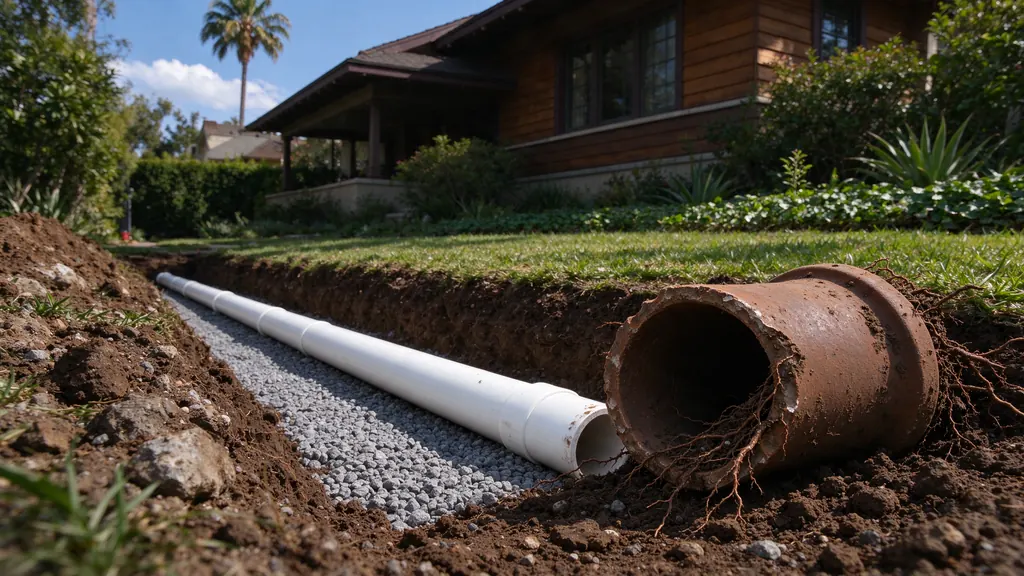
Clay sewer pipe replacement means removing or bypassing an old vitrified clay lateral and installing new pipe, usually PVC by trench, HDPE by pipe bursting, or a cured-in-place liner inside the clay itself. Clay rarely fails in the barrel. It fails at the joints, so the decision turns on how many joints have opened, cracked or shifted. Angeleno Sewer Line Repair works on clay laterals across Los Angeles, Pasadena, Glendale and Burbank and starts every clay job with a camera count of those joints.
A clay line that films with one bad joint and forty good ones needs a repair, not a replacement. A line with roots at every joint is a different conversation, and so is one where the clay has been cracked and shifted by moving ground.
What vitrified clay is good at
Vitrified clay pipe is made from clay fired at high temperature until it fuses into a hard, dense ceramic. That gives it real strengths. It does not rust, it resists the acids and chemicals that attack metal and concrete in a sewer, and its interior stays smooth for a long time. Clay is still used for public sewers, and the Bureau of Engineering’s own description of a typical Los Angeles street notes that the local mainline is usually a clay pipe under the middle of the street.
Its weaknesses come from the same properties. Clay is rigid and brittle. It cannot bend when the ground moves, and a point load, such as a rock pressing on it or a heavy vehicle over a shallow line, can crack it. Older residential clay was also made in short sections, which means many joints over the length of an ordinary lateral.
Why clay laterals fail at the joints
Older clay laterals were usually laid as bell-and-spigot pipe: the plain end of one section slid into the flared bell of the next, and the gap was packed with mortar, a bituminous compound or another sealant. Those joint materials age. Mortar cracks and loosens, compounds harden and pull away, and once the seal is gone the joint is an open gap in the pipe.
From there, a few things happen, often together:
- Roots enter. The open joint leaks moisture into the soil, roots follow it in, and the mat that forms catches solids. See tree roots in sewer lines.
- Joints separate. When soil settles or swells, the sections pull apart, leaving a wider gap.
- Joints offset. One section drops or shifts relative to the next, creating a lip that catches paper and debris.
- Bells crack. Root pressure inside the bell, or movement of the pipe, can split it.
- Soil gets in. Through a wide gap or a cracked bell, soil can wash into the pipe, and the void it leaves outside lets the pipe settle further.
Modern clay pipe uses factory-made compression joints with gaskets that are far more resistant to roots and movement. Many older laterals predate that, which is why age is a reason to look.
What the camera tells you about a clay line
Clay is easy to recognize on video: a smooth, often reddish-brown or glazed interior, with a visible joint every few feet. The useful findings are counts and locations. How many joints have roots, and how heavy? How many are separated or offset, and by how much? Are there cracks along the barrel, or broken pieces? Does the line hold water anywhere? Where does the clay meet the cast iron or plastic from the house, and where does it meet the City connection?
Clay laterals in Los Angeles were installed across many decades and the material in any one line varies, so the camera, not the house’s age, says what is in the ground. A camera inspection should note each change of material by footage as well as each defect.
Repair, line or replace
| What the camera shows in the clay | Usual direction | Why |
|---|---|---|
| One or two bad joints, rest of line sound | Spot repair | Replacing a short section ends the problem without touching good pipe |
| Roots or minor separation at many joints, pipe still round and aligned | Lining | A continuous liner seals every joint from the inside without a trench |
| Cracked, broken or offset sections along the line | Pipe bursting or trench replacement | The clay is no longer a sound host for a liner |
| Belly holding water | Excavation of the low section or the whole line | Only re-bedding restores slope |
| Collapsed section | Dig out the collapse, then decide on the rest | A liner cannot pass through it |
Spot repair removes the failed sections and joins new pipe to the remaining clay. It is the right call when the rest of the line is sound enough that you are not paying to dig twice. See spot repair.
Lining suits clay that is still intact enough to act as a host: round, aligned, open after cleaning. The liner bridges the joints and stops roots at every one of them. It needs thorough root removal first, and it inherits any sag. See sewer pipe lining.
Pipe bursting is well suited to brittle clay, because the bursting head fractures it easily and pushes the fragments into the surrounding soil as new HDPE pipe follows. It needs a launch pit and a receiving pit and mostly follows the old alignment. See pipe bursting.
Open-trench replacement removes the clay and lays new PVC on proper bedding at a checked slope. It is the method that corrects grade and handles any combination of defects. See sewer line replacement.
The repair vs replacement guide works through how to weigh a partial fix against the remaining life of the rest of the clay.
Transitions to cast iron and plastic
A lateral often changes material along its length. Cast iron for the building drain under the house and the first stretch outside, then clay to the street, is a familiar combination, and earlier repairs may have added plastic sections. Every material change is a joint between pipes with different outside diameters and different behavior.
Those transitions are frequent trouble spots. An old clay-to-cast-iron joint is often packed with mortar that has since cracked, and the two pipes move differently as the soil shifts. In a repair or replacement, new pipe is joined to old with a listed transition coupling made for that pair of materials and diameters, clamped to both sides. Firm, compacted bedding under the coupling matters as much as the coupling itself; if one side settles, the joint is stressed.
The far end matters too. In the City of Los Angeles the lateral runs to a wye or saddle at the main, and the main is usually clay. If the replacement reaches that connection, the work is in the right-of-way. When a liner or burst pipe ends at the property line instead, the joint between the new pipe and the remaining clay lower lateral should be shown on the post-work video.
The clay under the street
The lower lateral, from the property line to the main, is commonly clay as well, and in the City it is the owner’s responsibility. If the camera shows that section has failed, repairing it by any method needs a Bureau of Engineering S-Permit issued to a City Bonded Sewer Contractor. Lining and bursting in the right-of-way require camera video before and after the work, and a City inspector determines whether lining is feasible there. The City grades the footage, and a Very Poor rating means repair is required.
Cost drivers for clay replacement
There is no separate price for replacing clay as opposed to other materials, and no honest published figure for one. What the clay changes is which methods are possible. Brittle, intact clay often suits lining or bursting, which can avoid a long trench. Clay that is collapsed, badly offset or sagging pushes the job toward excavation. Beyond that, the usual drivers apply: length, depth, what sits on top of the line, how many transitions there are, and whether the street section is included. The replacement cost guide gives the method-by-method budgeting ranges.
Permits and inspection
Replacing clay on private property in the City of Los Angeles needs an LADBS plumbing permit and inspection before the line is covered or returned to service. Pasadena, Glendale and Burbank issue their own permits. Keep the post-work video and the finaled permit; LA Sanitation’s lateral repair rebate asks for both.
Who does the work
Clay replacement is performed by licensed, bonded and insured contractor partners. Any work on the lower lateral in the public right-of-way is done by a City of Los Angeles Bonded Sewer Contractor under the S-Permit.
What the work includes
- Clearing and camera inspection, with each failed joint counted and located
- A repair, lining or replacement recommendation tied to specific footage
- Permits: LADBS on the private side, an S-Permit when the work reaches the street
- Replacement of the clay by trench, bursting or lining, as the line allows
- Listed transition couplings at each change of material, including the connection toward the City main
- City inspection and a post-work video of the full lateral
Have a camera report, or a line that keeps backing up?
Phones answered 24/7, every day. Bring the video if you have one.
Related resources
Representative jobsite views
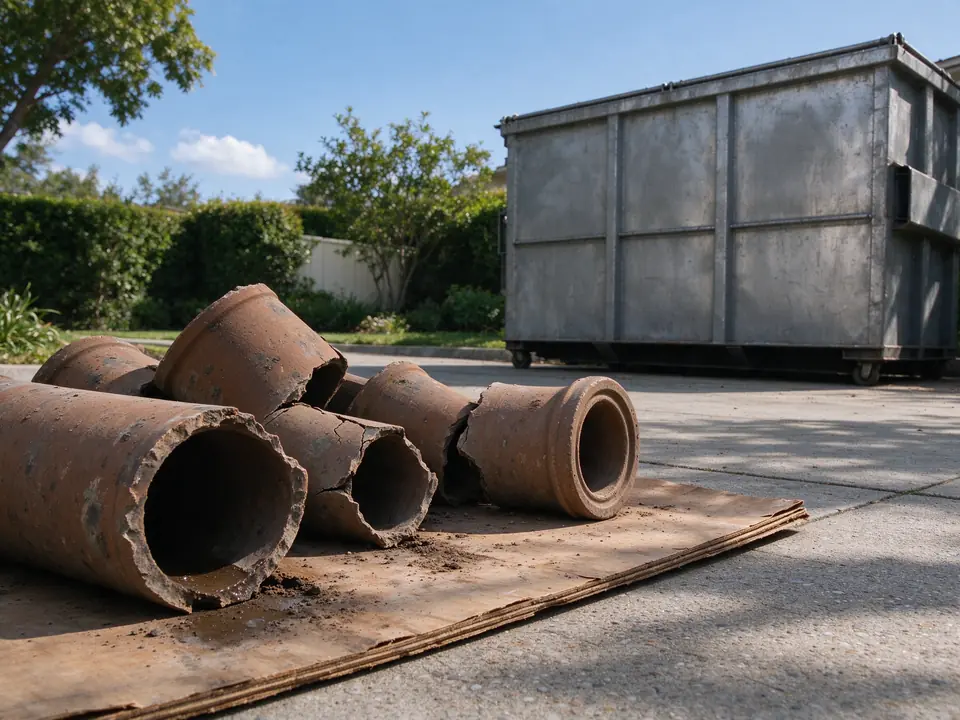
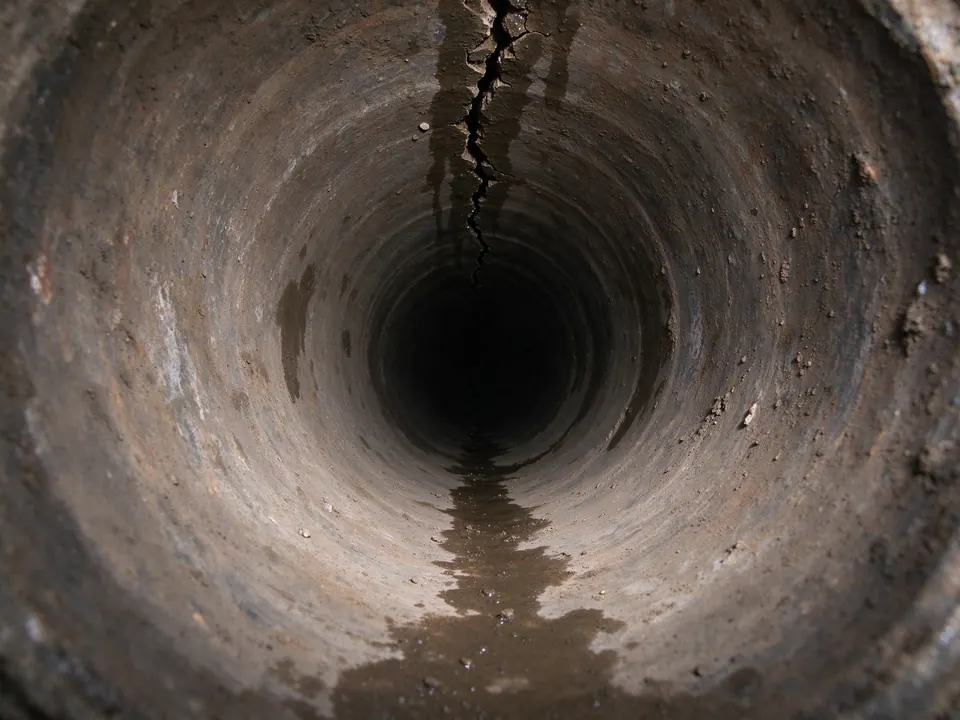
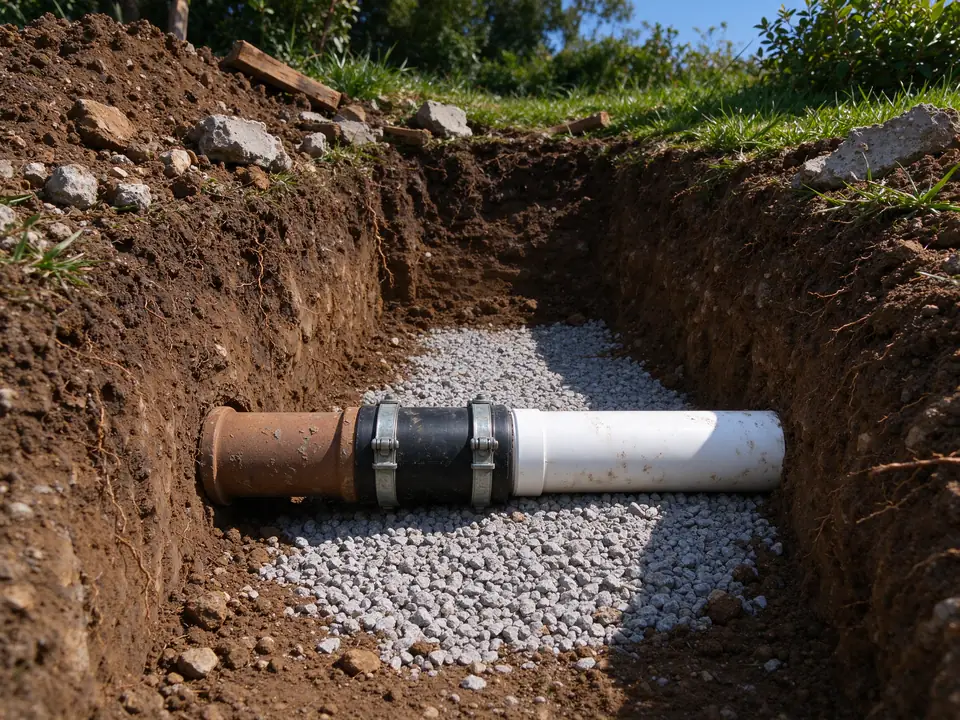
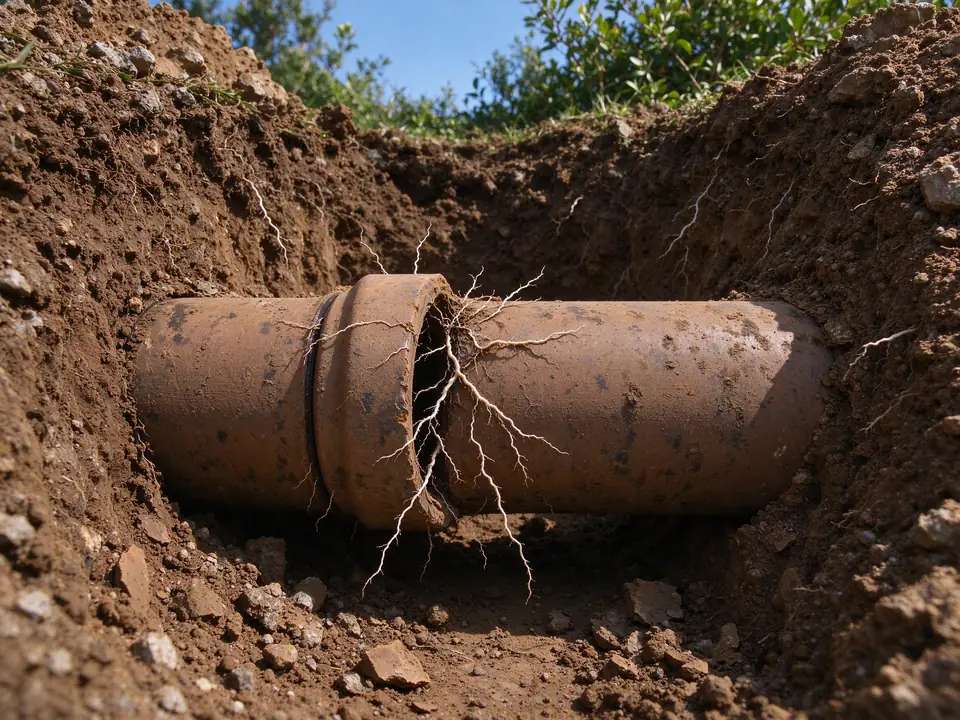
Representative illustrations of this kind of work, not photos of a specific job.
Questions people ask
Does all clay sewer pipe need to be replaced?
No. Vitrified clay does not corrode, and many old clay laterals still carry flow well. Age is a reason to film the line, not a reason to replace it. Replacement makes sense when the camera shows failing joints, cracks or offsets along much of the line.
Can a clay sewer line be lined instead of replaced?
Often, if the clay still holds its shape and is open enough after cleaning. A liner seals the joints and stops roots without a trench. It does not correct a belly, and it cannot be installed through a collapsed or badly offset section, which have to be repaired first.
Who is responsible for the clay section between my property line and the main?
In the City of Los Angeles, the owner is. LA Sanitation and the Bureau of Engineering both make the owner responsible for the entire lateral, including the lower section under the street. Work there needs an S-Permit issued to a City Bonded Sewer Contractor.
How is new pipe connected to old clay pipe?
With a listed transition coupling made for joining pipes of different materials and outside diameters. The coupling seals the joint and is clamped to both pipes, and good bedding under the transition keeps the two from shifting against each other.
Why does my clay sewer line keep getting roots?
Because clay laterals have many joints, and older joints were not built to keep roots out or to flex when the soil moves. Roots enter at the gap, are cut, and grow back through the same opening. Ending that cycle means sealing or replacing the joints.