Last updated:
Sewer line replacement in Los Angeles means replacing your building’s lateral, the private pipe that carries everything from the house to the City’s main under the street. Angeleno Sewer Line Repair replaces laterals across Los Angeles, Pasadena, Glendale and Burbank by open trench, pipe bursting or lining, and the camera decides which. That order matters more here than in most cities, because in Los Angeles the lateral is yours all the way to the main, including the part under the pavement.
A replacement is a bigger decision than a repair, and it is often sold too early. A line that backs up every winter might need one joint fixed, or it might be failing from end to end. Until the pipe has been filmed and the defects located from the surface, any replacement quote is a guess.
What happens on the first visit
The visit starts at the cleanout, the capped access fitting usually found near the house or by the property line. If the line is blocked, it gets cleared first so the camera can see; a camera pushed into standing sewage shows very little. The camera then travels the length of the lateral while the footage counter records distance, and a locator reads the camera head’s position and depth from the surface so each defect can be marked on the ground above it.
From that footage you get the facts a replacement decision rests on: the pipe material and diameter, how deep it runs, where it changes direction, where roots are entering, where sections have shifted, whether water is pooling in a low spot, and whether the pipe still holds its round shape. The route matters too. A lateral that runs under a driveway, a mature tree or a garage changes which methods are practical.
If there is no cleanout, or the only access is through a roof vent or a toilet, adding a proper cleanout is often the first piece of work. Every future inspection and cleaning depends on it.
When replacement makes more sense than repair
Replacement earns its cost when the problems are spread along the line rather than concentrated in one spot. Patterns that usually point that way:
- Roots entering at joint after joint. In vitrified clay pipe the barrel is durable and the joints are where it fails, so roots at many joints usually means many future entry points.
- Several offset joints, where sections have settled or shifted out of line.
- A belly, a low section where the pipe has lost its slope and holds water and solids. Laterals in the City are built to a minimum 2% slope; a belly undoes that.
- Cast iron that has corroded or channeled along the bottom, often under the house where it meets the clay lateral outside.
- Pipe that is losing its shape or has collapsed in places.
One cracked joint in a line that otherwise looks good on camera is a different job. That is a spot repair, and it usually costs a fraction of a full replacement. The honest test is whether fixing the worst spot leaves you with a line that will still be sound for years, or one where the next failure is already visible on the video.
Three ways to replace a lateral in Los Angeles
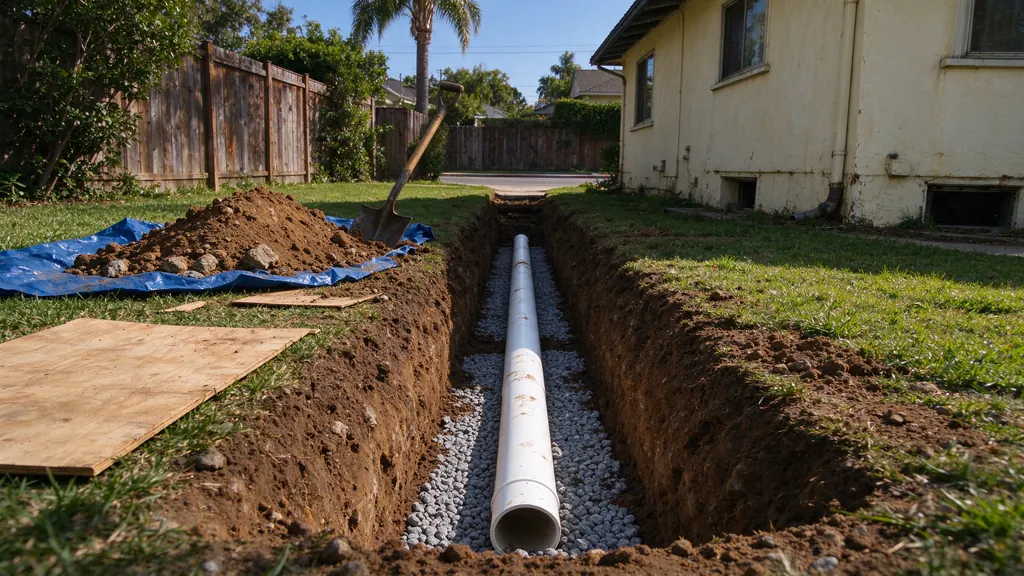
Open trench excavation removes the old pipe and lays new pipe on proper bedding at a checked slope. It is the only method that reliably corrects a belly, and it handles collapsed sections, tight bends and changes in direction. The cost is the trench itself: lawn, planting, walkways and driveway in the path have to come out and go back. In Los Angeles, a trench 5 feet or deeper needs shoring or another protective system under Cal/OSHA and federal OSHA trench rules, which adds equipment and time. See sewer line excavation.
Pipe bursting pulls a new high-density polyethylene pipe through the path of the old one from a launch pit to a receiving pit. A bursting head splits the old pipe and pushes the fragments into the surrounding soil as the new pipe follows. It works well for clay and cast iron that is broken or root-damaged along its length, and it can upsize the line. It mostly follows the existing path, so it is not a fix for a belly. See pipe bursting.
Lining (cured-in-place pipe, or CIPP) installs a resin-saturated liner inside the old pipe and cures it into a new pipe within the host. It needs only the cleanout or a small access point, which makes it attractive under driveways and mature trees. The old pipe has to be open enough to line, so collapse rules it out, and the liner takes the shape of the pipe it sits in, so a belly stays a belly. See sewer pipe lining.
| What the camera shows | Open trench | Pipe bursting | Lining |
|---|---|---|---|
| Roots and cracks along the line, pipe still round | Works | Works | Usually works |
| Belly holding water | Corrects slope | Mostly follows the sag | Follows the sag |
| Collapsed sections | Works | Sometimes | Ruled out |
| Line under a driveway or large tree | Most disruptive | Pits on either side | Least disruptive |
The trenchless options are compared in more depth in pipe bursting vs pipe lining.
The section under the street
Los Angeles Sanitation divides the lateral into an upper lateral, from the building to the property line, and a lower lateral, from the property line to the main in the middle of the street. It makes the property owner responsible for both. When the camera shows the lower lateral has failed, replacing it is still your project, with a different set of rules.
Work in the public right-of-way needs a Bureau of Engineering S-Permit, and the City issues it only to an active Bonded Sewer Contractor. That applies to lining and bursting in the street as well as excavation, and lining or bursting in the right-of-way requires camera video before and after the work. The City inspects the connection, and if pavement is cut, a street damage restoration fee applies, set by the street’s classification and how recently it was resurfaced. Street work also brings traffic control and, on some streets, limits on when the work can happen.
Under the City’s current fee schedule the S-Permit itself is $273 and inspection of the house connection is $2.84 per linear foot, with City surcharges on top. Those fees are small next to the construction, but they belong in any bid that crosses the property line. More detail is in the Los Angeles sewer permit guide.
What sewer line replacement costs in Los Angeles
Typical budgeting ranges for Los Angeles-area projects, as of October 2026:
- Full open-trench replacement: $5,000 to $25,000 or more, before hardscape replacement, permits and street work.
- Pipe bursting: $6,000–$25,000 per job, with street-side pits and hardscape pushing toward the high end.
- Lining a typical lateral of about 50 feet: $6,000–$15,000.
What moves the number most is length, depth, what sits on top of the line, and whether the street is involved. A 40-foot lateral under a lawn and a 90-foot lateral under a driveway, a mature ficus and a street are different jobs that share a name. The replacement cost guide breaks the drivers down, and the estimator gives a range for your own line.
These are budgeting figures, not quotes or company rates. A written bid should name the method, the footage, the depth, what restoration is included and which permits it covers.
Permits, inspection and the rebate
Replacing a lateral on private property in Los Angeles needs an LADBS plumbing permit, and the City inspects the work before the trench is closed or the line is put back in service. Pasadena, Glendale and Burbank each run their own permits and inspections, with rules that differ from the City of LA.
LA Sanitation’s sewer lateral repair rebate can return up to $2,500 of the cost while each year’s funds last. It asks for the work to be done by a licensed and bonded sewer contractor and for a City-finaled permit, so plan the paperwork before the work starts rather than after.
Who does the work
Replacement work is performed by licensed, bonded and insured contractor partners. Anything in the public right-of-way is done by a City of Los Angeles Bonded Sewer Contractor under the S-Permit, which is the only way that section can legally be replaced in the City.
What the work includes
- Camera inspection and surface locating before the method is chosen
- Permits: LADBS on the private side, a Bureau of Engineering S-Permit when the work reaches the street
- Excavation, bursting or lining of the lateral, with transitions to the building drain and the city connection
- Bedding, slope and backfill checked against the permit and inspected by the City
- A cleanout where the line has no usable access point
- Post-work camera video, kept with the permit sign-off
- Restoration of the excavated areas, with hardscape and street restoration scoped and priced separately
Have a camera report, or a line that keeps backing up?
Phones answered 24/7, every day. Bring the video if you have one.
Related resources
- How Much Does Sewer Line Replacement Cost in Los Angeles?
- What Is a Sewer Lateral? A Los Angeles Owner's Guide
- Sewer Line Repair vs Replacement: How to Decide
- Pipe Bursting vs Pipe Lining: Which One Fits Your Sewer Line?
- Sewer Line Replacement Permit in Los Angeles: What You Need and Who Pulls It
- Sewer Lateral Repair Rebate in Los Angeles: Eligibility, Documents and Deadlines
Representative jobsite views
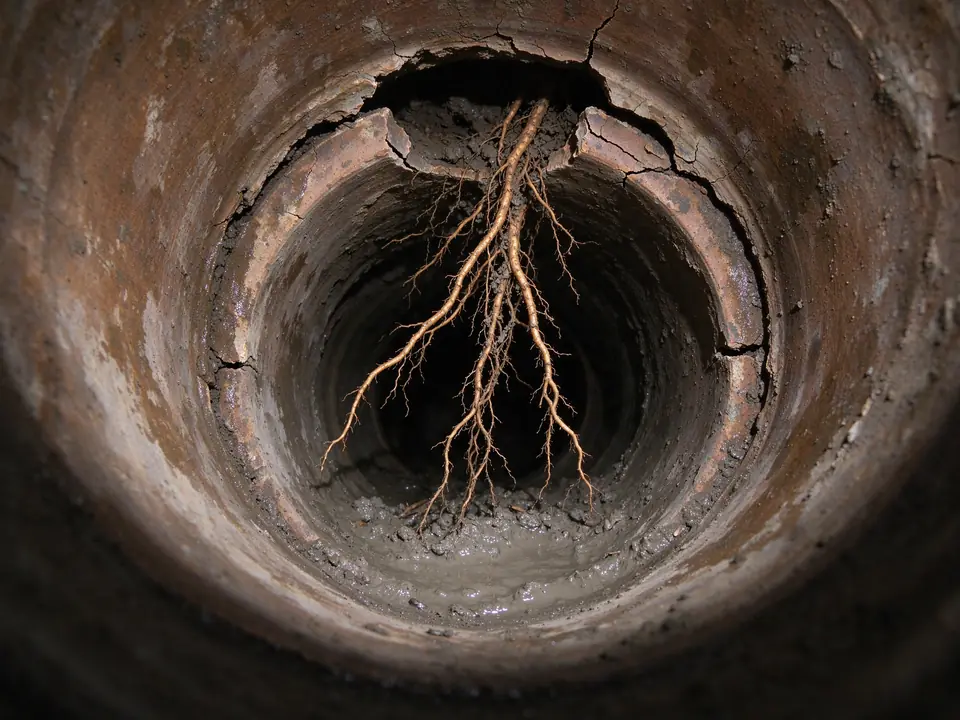
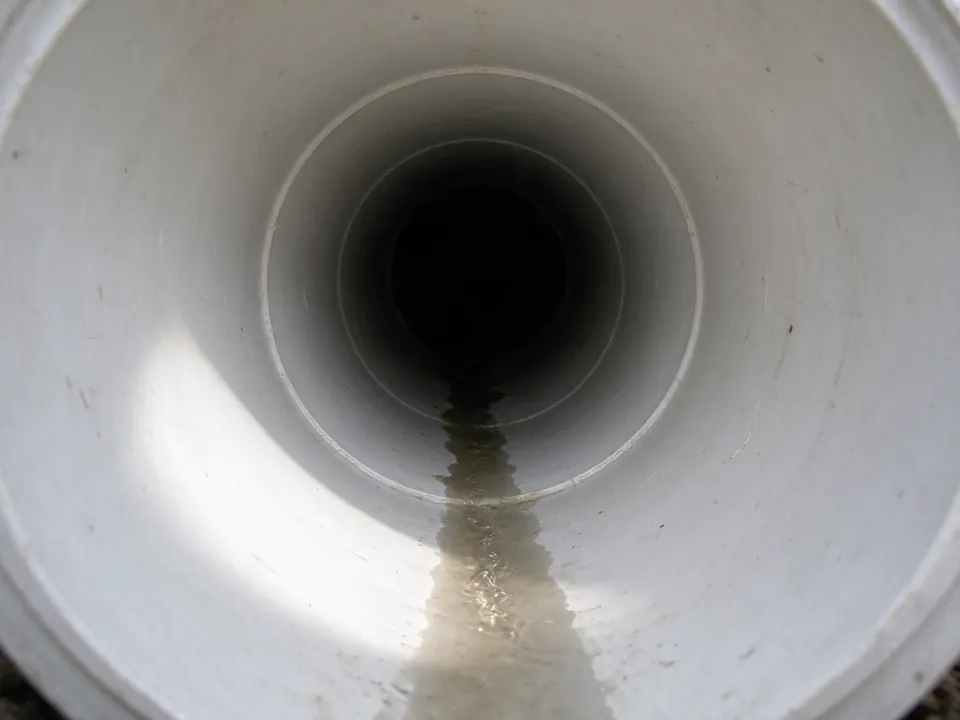
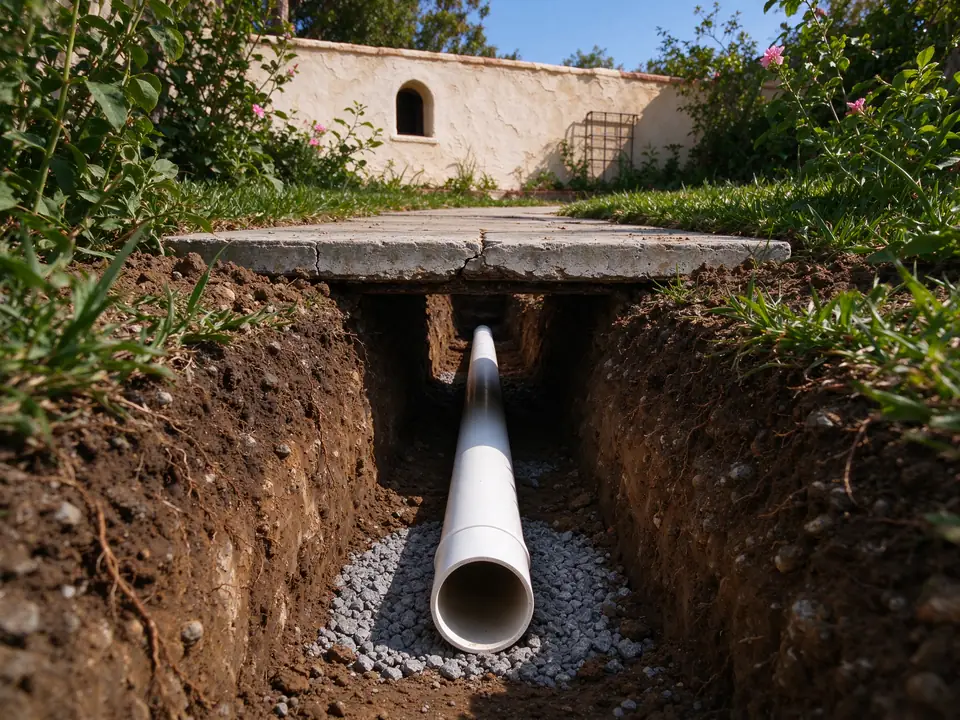
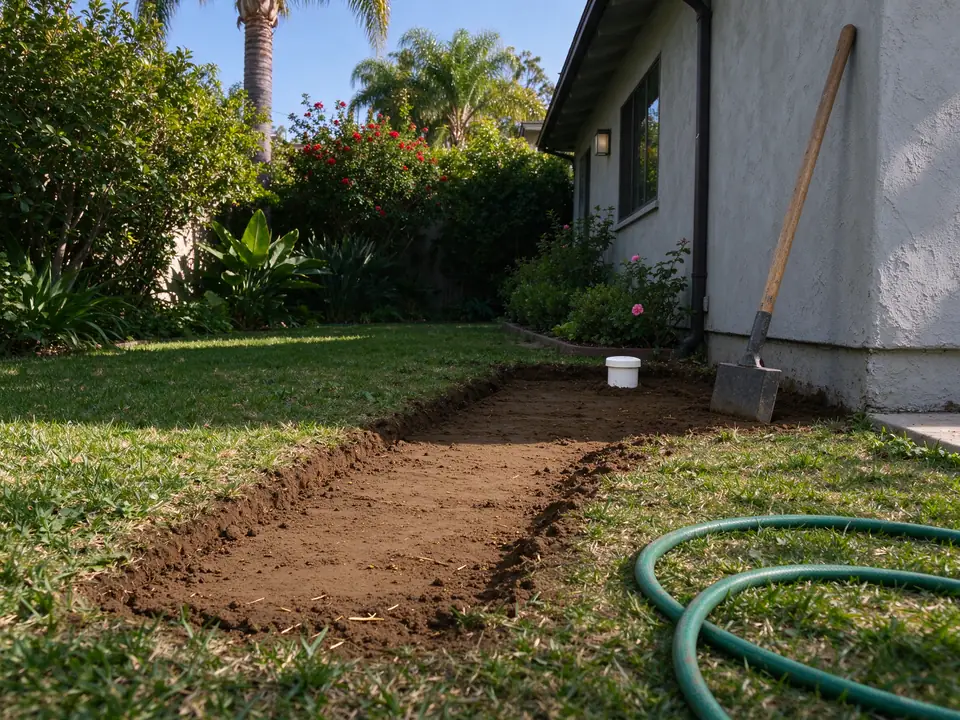
Representative illustrations of this kind of work, not photos of a specific job.
Questions people ask
How do I know if my sewer line needs replacing rather than repairing?
Replacement makes sense when the camera shows defects along much of the line, such as roots at many joints, several offsets, a long belly or pipe that is losing its shape. One isolated defect in an otherwise sound line usually points to a spot repair instead. The video, not the symptom, should make that call.
Can you replace a sewer line without digging up my yard?
Often the trench can be avoided. Pipe bursting pulls a new pipe through the old path from two access pits, and lining forms a new pipe inside the old one from the cleanout. Neither works through a belly that needs its slope corrected, and bursting needs room for its pits.
Do I have to replace the part under the street?
Only if the camera shows it has failed. In the City of Los Angeles that lower section is yours to maintain, and work on it needs a Bureau of Engineering S-Permit issued to a City Bonded Sewer Contractor, plus City inspection and a street restoration fee if pavement is cut.
How long will my house be without sewer service?
It depends on the method and on whether the street section is involved. Lining and bursting usually keep the disconnection window shorter than a full trench. Any bid you accept should state how long the line will be out of service and what to do about toilets and drains in the meantime.
Does the City of Los Angeles help pay for sewer line replacement?
LA Sanitation offers a sewer lateral repair rebate of up to $2,500, first come, first served while each year's funds last. It requires the work to be done by a licensed and bonded sewer contractor, a City-finaled permit, and paperwork including an itemized invoice. Check current availability before you count on it.