Last updated:
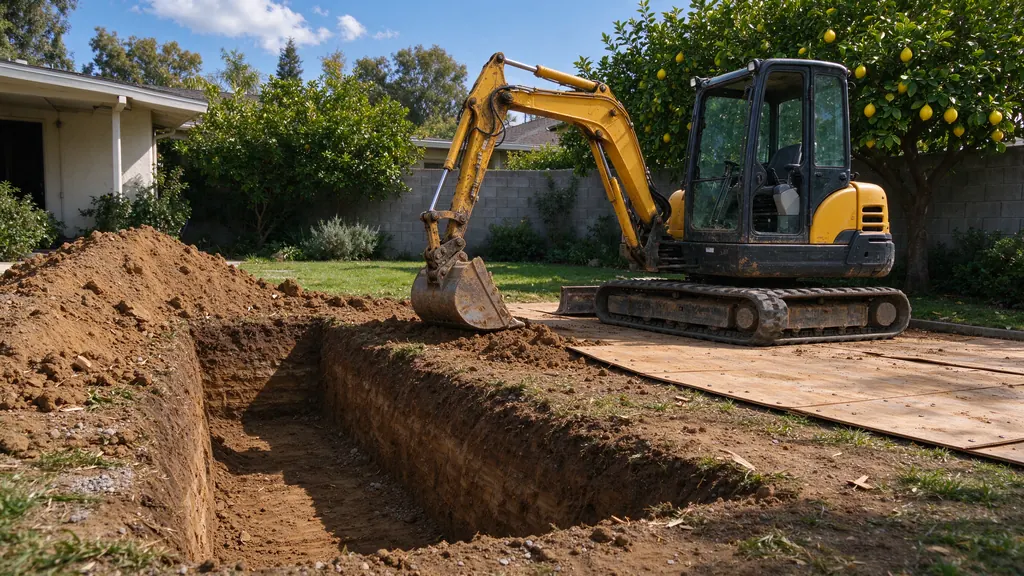
Sewer line excavation is the open-trench way of repairing or replacing a lateral: dig down to the pipe, remove what has failed, lay new pipe on proper bedding at a measured slope, have it inspected, and backfill. Angeleno Sewer Line Repair excavates laterals in Los Angeles, Pasadena, Glendale and Burbank when the camera shows that digging is the method the pipe needs, which is more often than trenchless marketing suggests.
Excavation is the oldest method and the most disruptive, and it is also the most capable. It is the only reliable way to correct a belly, it handles collapse and sharp changes in direction, and it lets an inspector see the new pipe before it disappears. Its costs are the trench itself, the restoration above it and the safety work that a deep trench demands.
When digging is the right call
The camera points toward excavation in a few recognizable situations.
A belly. When a section of lateral has settled and holds water, the problem is the support under the pipe. Lining forms to the sag, and bursting mostly follows it. Digging lets the crew remove the settled pipe, rebuild the bed with compacted granular material and set new pipe back on grade. This is the core of sewer line belly repair.
Collapse. A section that has caved in leaves nothing for a liner to form against and may stop a bursting head. Excavation removes it directly. See collapsed sewer line repair.
A single failed section near the surface. One broken joint under lawn, a few feet down, is often fastest and cheapest to dig and replace as a spot repair.
Short, shallow runs under soft ground. Where the lateral runs under lawn or planting and is not deep, the restoration cost that makes trenchless attractive is small, and a trench can cost less overall.
A new connection or re-route. Tying in an accessory dwelling unit, moving the line away from a new foundation or replacing a lateral with no usable path all call for digging. The depth of the existing lateral at the tie-in point sets how deep the new branch has to go, which is worth knowing before ADU plans are finished.
Before the first shovel
Locate the lateral. A camera with a transmitter in its head is read from the surface so the route and depth can be painted on the ground. Guessing at a lateral’s path wastes trench.
Mark the utilities. In Southern California, the excavator notifies DigAlert by calling 811 before digging, and the gas, water, electric and communications utilities mark their lines in the area. California law requires that notice before excavation. Utilities do not mark private lines, so sprinkler mains, lines to detached buildings and low-voltage wiring need separate locating. Near a marked line, the crew exposes it by careful hand digging or vacuum excavation rather than with the machine.
Pull the permits. Private-side excavation in the City of Los Angeles needs an LADBS plumbing permit. LAMC 64.12(d) makes clear that clearing a stoppage does not need a permit, but replacing any part of the line or excavating in the street or sidewalk does. Work past the property line needs a Bureau of Engineering S-Permit.
The trench is the hazard
Soil that looks stable can fail without warning, and a cubic yard of it can weigh well over a ton. Cal/OSHA and federal OSHA require a protective system, such as shoring, a trench box or sloping the walls back, in excavations 5 feet deep and deeper. Even in a shallower trench, the protective system can be skipped only when a competent person has examined the ground and found no sign of a possible cave-in. Spoil piles are kept back from the edge, access ladders are placed in deeper trenches, and nobody works in an unprotected trench to save time.
Laterals in the City are set at least 4 feet deep at the property line under the Bureau’s standard plans, and many run deeper toward the street or on sloped lots. That puts a large share of lateral work at or past the depth where protective systems apply. For a homeowner, the practical rule is simple: keep children and pets away, and do not climb in to look.
How the new pipe goes in
Once the failed pipe is out, the trench bottom is shaped and a bed of granular material is placed and compacted, so the new pipe rests on uniform support instead of on rocks or loose fill. New pipe, usually PVC on a residential lateral, is laid at a slope checked with a laser level or a grade rod. The City’s standard plans call for a minimum 2% slope on new house connections, roughly a quarter inch of fall per foot, so solids keep moving with the water.
Where the new pipe meets the old, at the building drain or at a section of lateral that stays, the joint is made with listed couplings designed for the two materials and diameters. If the line has no usable cleanout, adding one while the ground is open costs far less than adding it later.
The open trench is then inspected: LADBS on the private side, and the Bureau of Engineering for the house connection in the right-of-way. Only after that sign-off is the pipe covered.
Backfill and restoration
Backfill goes in in lifts, each compacted before the next, starting with material that protects the pipe and continuing to the surface. Dumping the soil back in and running water over it leaves a trench that settles for months, and settlement around a new pipe is how a fresh belly starts.
Restoration is where bids differ most. Soil and rough grading are usually included. Lawn, irrigation, planting, walkways, driveways and patios are often priced separately or excluded. In the street, the City charges a street damage restoration fee per square foot of cut pavement, set by the street’s classification and how recently it was resurfaced. Read that part of any bid line by line.
What sewer line excavation costs in Los Angeles
Typical budgeting ranges for Los Angeles-area projects, as of October 2026:
- Full lateral replacement by open trench: $5,000 to $25,000 or more.
- Open trench by length: $150–$300 per foot.
- A single-section spot repair by excavation: $1,500–$8,000.
Depth moves the number more than people expect, because a deep trench needs shoring, more digging and more backfill for the same footage of pipe. Concrete or driveway over the line, a hillside lot, groundwater near the LA River or in some canyons, and any work in the street push higher. The replacement cost guide explains the drivers, how deep is a sewer line covers depth, and the quote comparison guide helps line up bids. These are budgeting figures, not quotes or company rates.
When a utility crew damaged the pipe
Sometimes the camera shows a lateral crushed or pierced where another utility’s line crosses it, or near a recent excavation. Keep the video and the footage reading, photograph the surface, and contact the utility that did the work before the repair if you can. Whether they pay is between you and them, but the evidence is easiest to preserve before the trench is closed.
Excavation is performed by licensed, bonded and insured contractor partners, with anything in the public right-of-way done by a City of Los Angeles Bonded Sewer Contractor under the S-Permit.
What the work includes
- Camera inspection and surface locating of the route and depth before digging
- Utility marking request and locating of private lines in the dig area
- Excavation with shoring or another protective system wherever depth requires it
- Removal of failed pipe and installation of new pipe on bedding at a checked slope
- Transitions to the building drain and the remaining lateral with listed couplings
- City inspection of the open trench before backfill
- Backfill and compaction in lifts, with soil restoration; hardscape and street restoration scoped separately
Have a camera report, or a line that keeps backing up?
Phones answered 24/7, every day. Bring the video if you have one.
Related resources
- How Deep Is a Sewer Line?
- How Much Does Sewer Line Replacement Cost in Los Angeles?
- Sewer Line Replacement Permit in Los Angeles: What You Need and Who Pulls It
- Sewer Line Repair vs Replacement: How to Decide
- How to Compare a Sewer Line Repair Quote
- Who Is Responsible for Sewer Line Repair in Los Angeles?
Representative jobsite views
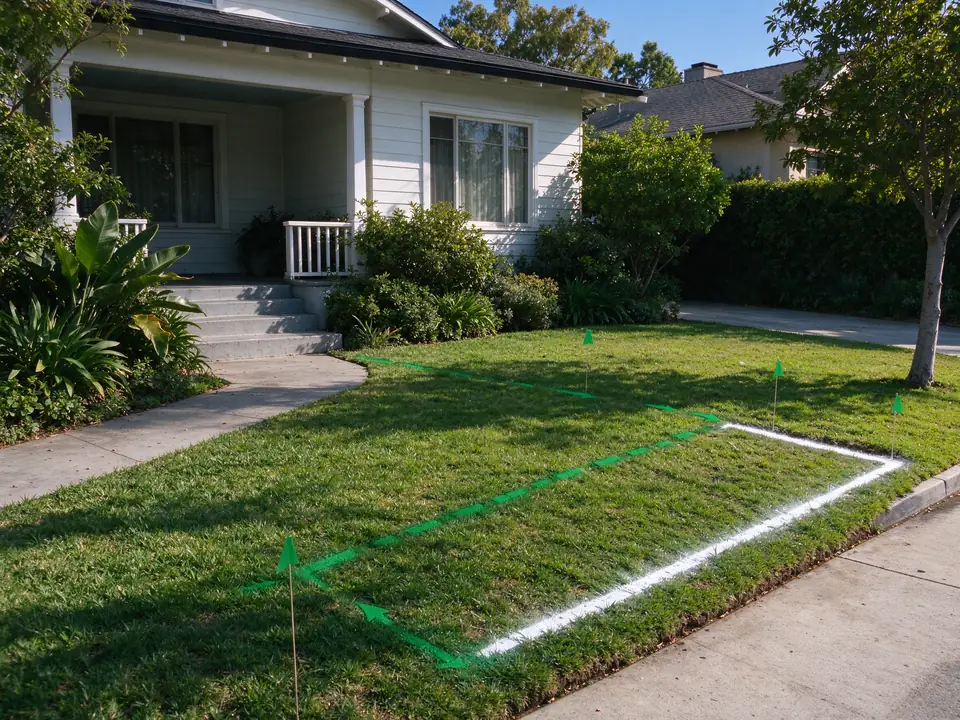
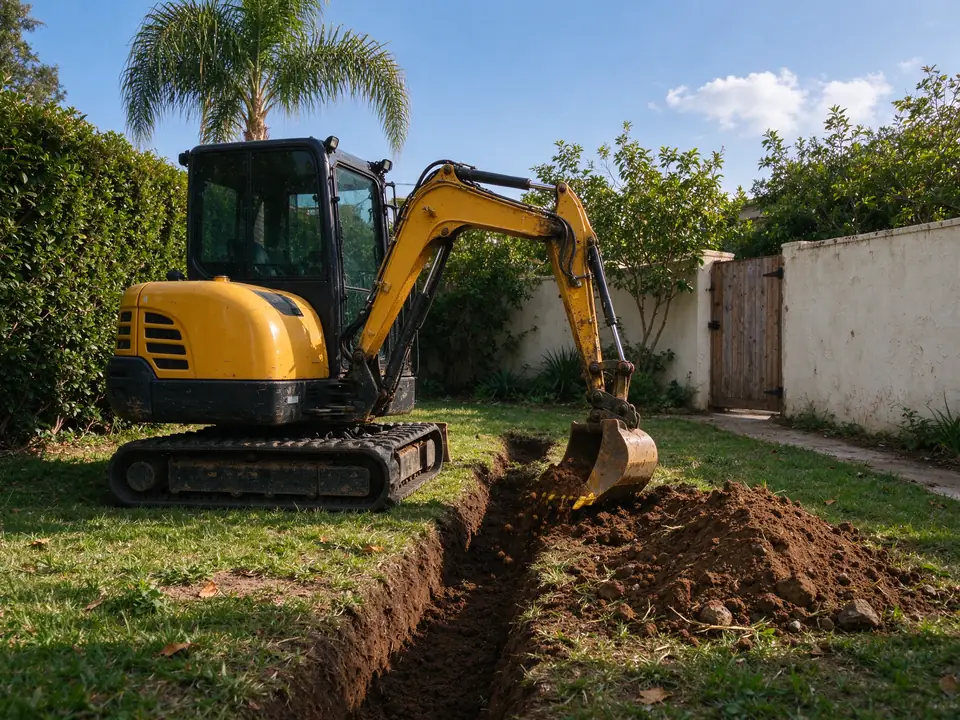
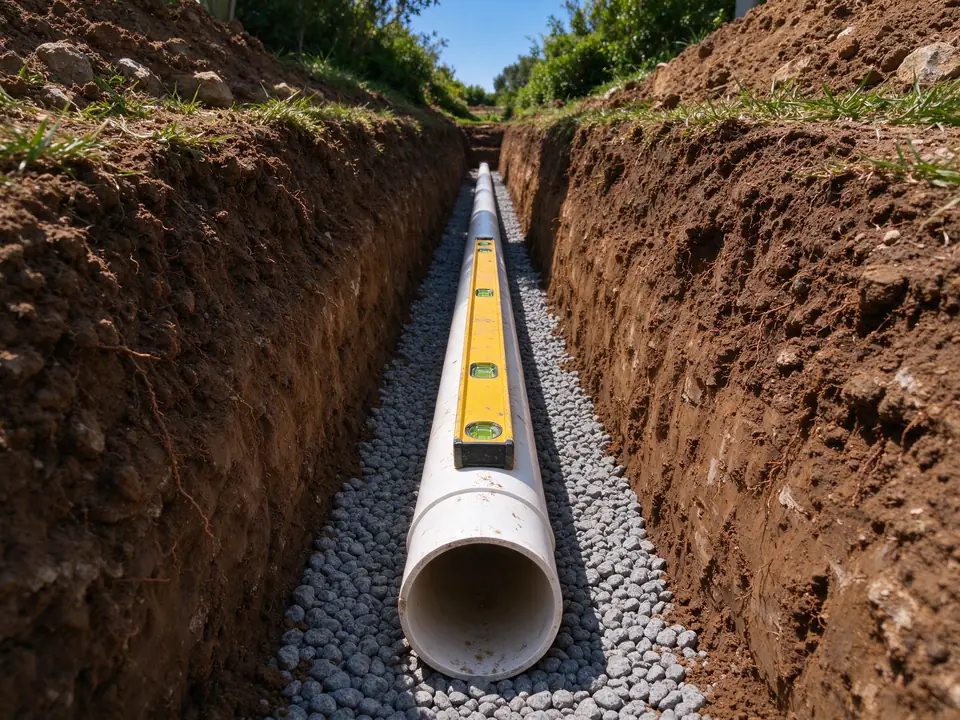
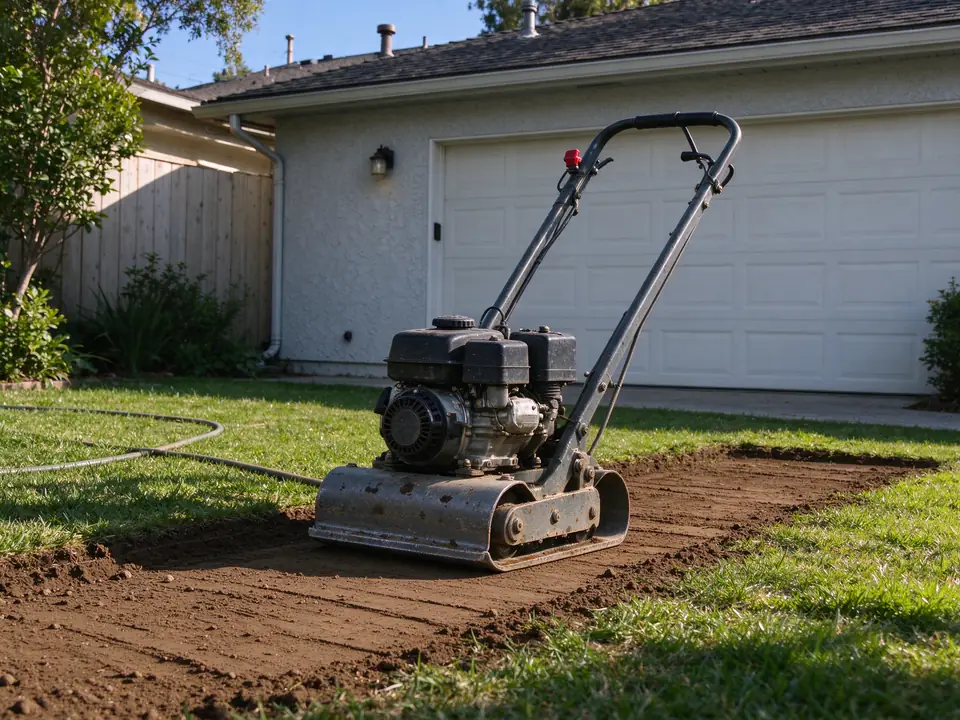
Representative illustrations of this kind of work, not photos of a specific job.
Questions people ask
Why is excavation the only reliable fix for a sewer belly?
A belly is a problem with the ground under the pipe, not just the pipe. Lining and bursting follow the existing profile, so the sag remains. Excavation exposes the low section, lets the crew re-bed it on compacted material and set new pipe at a measured slope, and lets the inspector see the grade before it is buried.
Is about $8,000 reasonable for 14 feet of sewer at 9 feet deep?
It can be, and the depth is the reason. A 9-foot trench needs shoring or another protective system, more excavation volume, more spoil to manage and more backfill and compaction than a shallow one. Compare bids on the same scope: footage, depth, shoring, permits, restoration and whether any street work is included.
How do I find out where my sewer line runs and how deep it is?
A camera inspection with a locator answers both. A transmitter in the camera head is read from the surface, so the route can be marked on the ground with a depth at each point. Old plans and permit records sometimes help, but laterals often do not run where people expect.
Do I need to be home while the trench is open?
Not necessarily, but the trench needs to be off-limits to children, pets and anyone not on the crew. An open trench can collapse without warning, and a person caught in even a partial cave-in can be seriously hurt. The crew should fence or cover the excavation whenever work stops.
Who is responsible for excavating the part of my lateral under the street?
In the City of Los Angeles, the property owner. Excavation in the street or sidewalk needs a Bureau of Engineering S-Permit issued to a City Bonded Sewer Contractor, City inspection of the connection, traffic control and a street damage restoration fee for the cut pavement. Other cities in the area set their own rules.