Last updated:
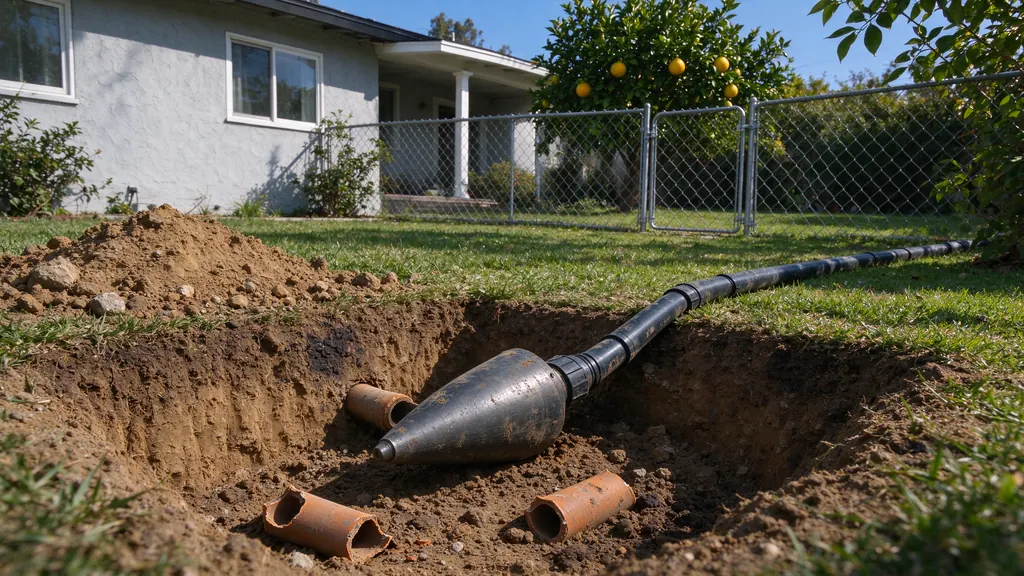
Pipe bursting sewer line replacement pulls a new pipe through the path of the old lateral while a cone-shaped head breaks the old pipe apart ahead of it. The fragments are pushed into the surrounding soil, the new pipe takes their place, and the only excavation is a pit at each end. Angeleno Sewer Line Repair uses bursting in Los Angeles, Pasadena, Glendale and Burbank when the old pipe is too broken to line but still offers a continuous path to follow.
It is a replacement, not a rehabilitation. When the job is done, the old pipe is gone and a new one is in the ground. That separates it from lining, which keeps the old pipe as a form, and it explains both what bursting can do and what it cannot.
How a lateral is burst
The route and depth come first. A camera inspection records the material, diameter and condition of the old pipe, and a locator marks its path and depth from the surface. Those marks set where the two pits go and how deep each one has to be.
Utilities are located before anyone digs. In Southern California, the excavator notifies DigAlert by calling 811 before digging, so utility owners can mark their lines, and California law requires that notice ahead of excavation. Private lines the utilities do not mark, such as an irrigation main, a line to a pool or a gas line to a detached garage, need their own locating. Bursting adds a reason to be careful: the head pushes broken pipe outward, so anything close to the path can be hit even if it is never touched by a shovel.
Two pits are dug. The launch pit, usually near the house or the cleanout, is where the new pipe enters the ground. The receiving pit, at the far end of the run, is where the bursting unit pulls the head out. The launch pit has to be long enough for the new pipe to curve down to pipe depth without kinking. Any pit 5 feet deep or more needs shoring or another protective system under Cal/OSHA rules, and no one should enter a deeper pit without it.
The new pipe is fused to length. High-density polyethylene, or HDPE, comes in sections that are heat-fused into one continuous pipe on site. The fused joint is as strong as the pipe itself, so the finished line has no joints for roots to find.
The head is pulled through. A cable or rod string is threaded through the old pipe from the receiving pit and attached to the bursting head, with the new pipe fixed behind it. A static unit pulls the assembly through with steady force; a pneumatic head adds percussive blows. Clay fractures cleanly. Cast iron is tougher and often needs a head with cutting blades that splits it open.
Both ends are connected. At the house, the new pipe is joined to the building drain, and at the far end to the remaining lateral or toward the main, using listed couplings that suit the two materials. The new line is filmed end to end before the pits are closed.
Upsizing
Because bursting expands the soil around the old pipe, the new pipe can often be one size larger than the old one. That helps where a line is undersized for what now drains into it, such as a house that has added bathrooms or an accessory dwelling unit. How far a line can be upsized depends on the soil, the depth and what sits near the path, since a bigger head displaces more ground.
Lining cannot do this. A liner slightly reduces the inside diameter of the pipe it is formed in.
Where bursting does not fit
A belly. The head follows the old pipe, so the new line inherits the old line’s profile. If the camera shows a low section holding water, bursting through it will likely leave a low section in the new pipe. The reliable fix is to excavate that section and re-bed it at a proper slope, which can be done alongside bursting elsewhere. See sewer line belly repair.
Utilities or structures too close. Gas, water or electrical lines running beside the lateral, a shallow foundation footing, or a neighbor’s lateral nearby may not tolerate the soil movement. Sometimes those lines can be exposed and protected; sometimes the section has to be dug instead.
Sharp bends or changes in direction. A head and a stiff HDPE pipe need a reasonably straight run between pits. A lateral that turns sharply at a fitting may need an extra pit at the bend, or a different method for that part.
No path to follow. A fully collapsed section filled with soil can stop the head or let it wander. Short collapses are sometimes burst through; longer ones are dug. See collapsed sewer line repair.
No room for the pits. A narrow side yard, a lateral that exits under the house, or a line that runs under a structure can leave nowhere practical for a launch pit.
Bursting in the street
Los Angeles Sanitation makes the property owner responsible for the whole lateral, up to the main in the middle of the street. When the lower section has failed, bursting it is work in the right-of-way, and the Bureau of Engineering requires that pipe bursting there be completed by a Bonded Sewer Contractor under an S-Permit, with camera video before and after.
A receiving pit in the street means cut pavement, traffic control and the City’s street damage restoration fee, which is charged per square foot and set by the street’s classification and how recently it was resurfaced. Rates on the current schedule include $8.24 per square foot for a local street and $19.44 for a select street. The S-Permit itself is $273 plus City surcharges, and house connection inspection is $2.84 per linear foot. See the sewer permit guide and street sewer lateral repair for the process.
On private property in the City, bursting needs an LADBS plumbing permit. Pasadena, Glendale and Burbank each run their own permits and inspections.
What pipe bursting costs in Los Angeles
Typical budgeting ranges for Los Angeles-area projects, as of October 2026:
- Pipe bursting by length: $145–$300 per foot.
- Pipe bursting per job: $6,000–$25,000.
- Lining a typical lateral of about 50 feet, for comparison: $6,000–$15,000.
The wide per-job range reflects how much the pits drive the cost. Two shallow pits in a lawn sit near the bottom. Deep pits that need shoring, a receiving pit in the street, concrete or driveway over a pit, an extra pit at a bend and a dug section to correct a belly push toward the top. The trenchless cost guide covers these drivers, and pipe bursting vs pipe lining compares the two methods for the same line. These are budgeting figures, not quotes or company rates.
What to ask about a bursting bid
Ask where each pit will be, how deep, and what will be removed and restored at each. Ask what pipe size and type will be installed and how it connects at both ends. Ask how nearby utilities will be located and protected, and what happens if one turns out closer than expected. Ask whether any part of the line has a belly, and if so how the bid handles it. For a line made of clay, bursting is often a strong candidate; the video still has to agree.
Bursting is performed by licensed, bonded and insured contractor partners, with any work in the right-of-way done by a City of Los Angeles Bonded Sewer Contractor under the S-Permit.
What the work includes
- Camera inspection and surface locating of the route, depth and both ends of the run
- Utility marking and locating of gas, water and other lines near the path
- Launch and receiving pits, with shoring where depth requires it
- Fusing the new HDPE pipe to length and bursting it into place
- Connections at the building drain and toward the main with listed couplings
- Post-work camera video of the new pipe
- Backfill and basic restoration of the pits, with hardscape and street restoration priced separately
Have a camera report, or a line that keeps backing up?
Phones answered 24/7, every day. Bring the video if you have one.
Related resources
- Pipe Bursting vs Pipe Lining: Which One Fits Your Sewer Line?
- How Much Does Trenchless Sewer Repair Cost in Los Angeles?
- How Much Does Sewer Line Replacement Cost in Los Angeles?
- How Deep Is a Sewer Line?
- Sewer Line Replacement Permit in Los Angeles: What You Need and Who Pulls It
- Who Is Responsible for Sewer Line Repair in Los Angeles?
Representative jobsite views
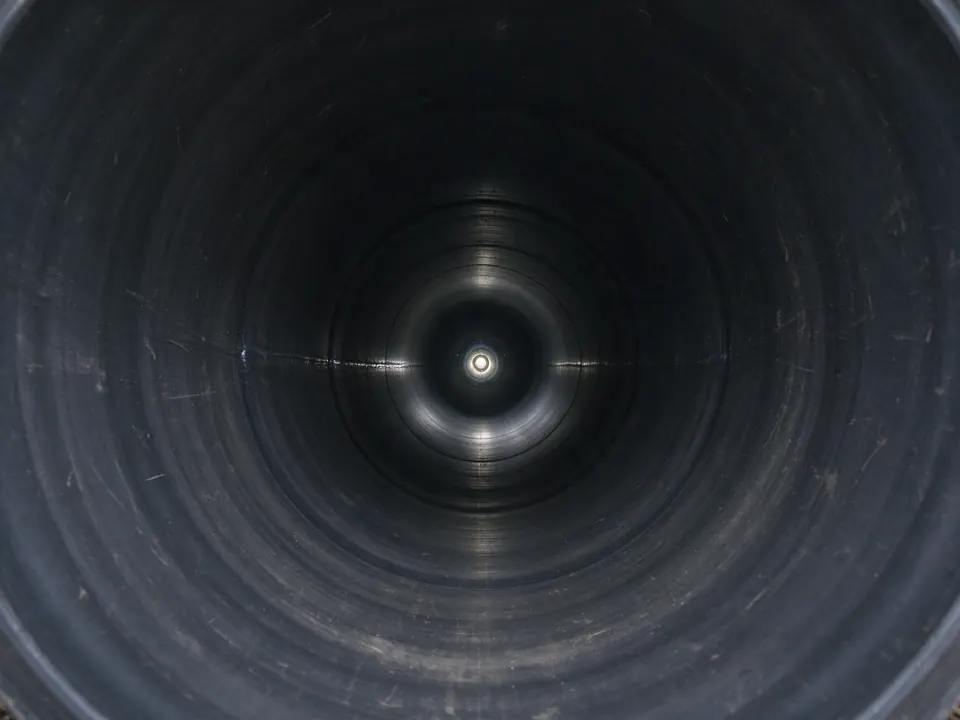
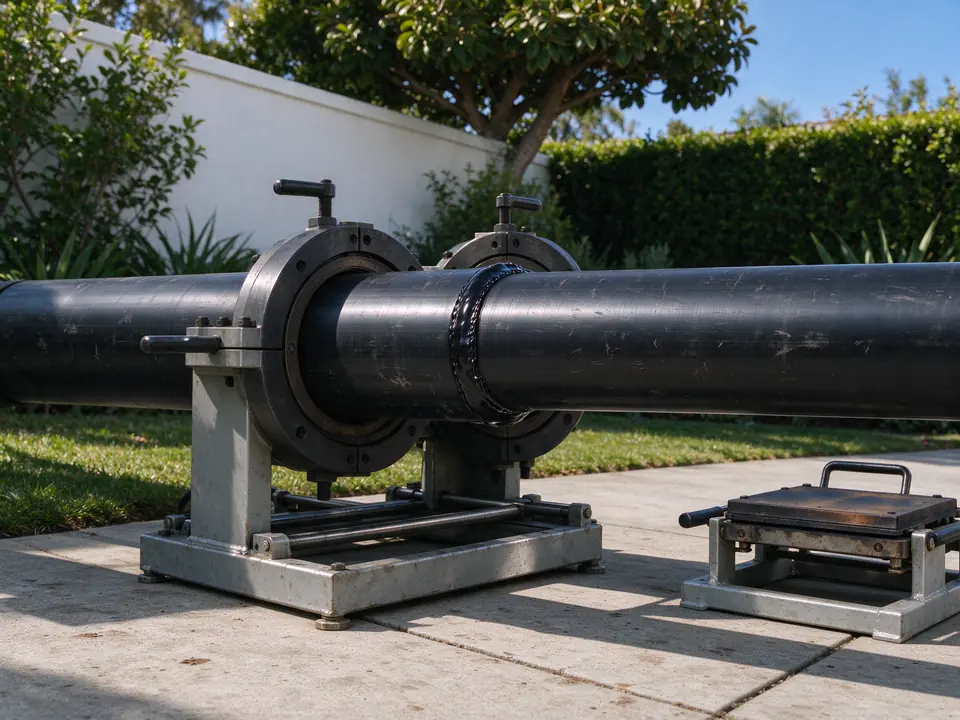
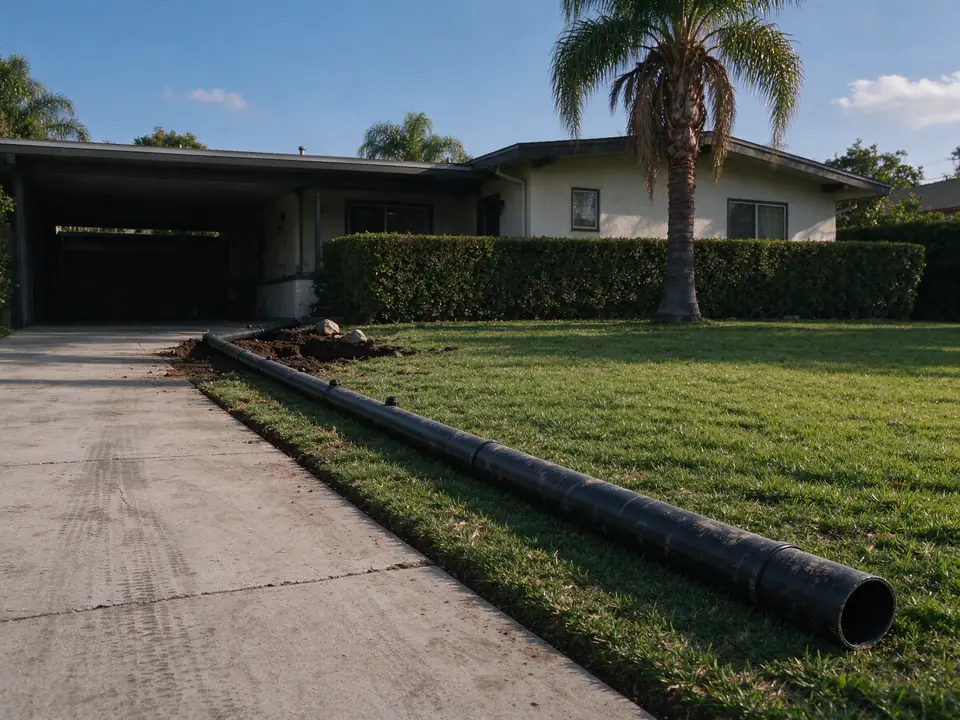
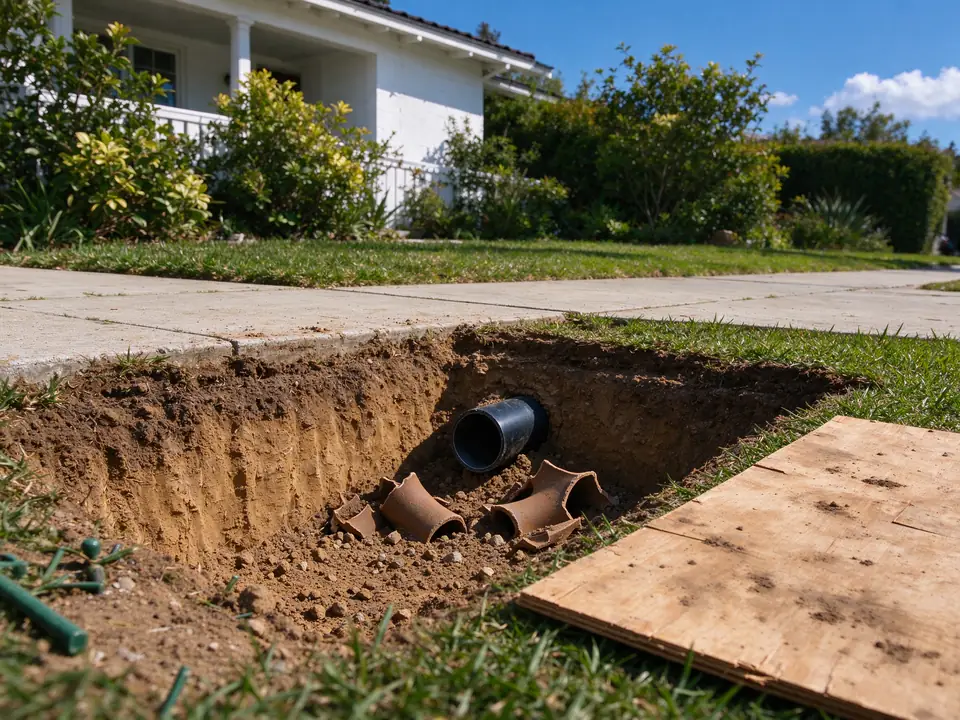
Representative illustrations of this kind of work, not photos of a specific job.
Questions people ask
Can pipe bursting fix the slope of my sewer line?
Not reliably. The bursting head follows the old pipe, so the new line mostly takes the old line's profile, including a sag. A short, shallow belly may come out slightly better, but if the camera shows standing water, plan to dig and re-bed that section. Bursting can still replace the rest.
How big are the pits for pipe bursting?
Each pit has to reach the pipe's depth and be long enough for the equipment and for the new pipe to bend down into the ground at the launch end. On a residential lateral that is usually a few feet across, much smaller than a trench, but depth varies by line and pits 5 feet or deeper need shoring.
Can pipe bursting damage my gas or water line?
It can if they are too close. The head pushes broken pipe outward into the soil, so lines running beside or crossing the lateral are located and exposed where needed before bursting. Where clearance cannot be made safe, the section is excavated or a different method is used.
Can a cast iron or clay line be burst?
Usually, yes. Clay fractures cleanly under a bursting head. Cast iron is tougher and may need a head with cutting blades that splits it rather than shattering it. Pipe that has been repaired with a different material partway along, or that runs through concrete encasement, needs closer review on camera.
Who is responsible for bursting the section under the street?
In the City of Los Angeles, the owner. The lower lateral to the main is yours to maintain, and the Bureau of Engineering requires pipe bursting in the right-of-way to be done by a Bonded Sewer Contractor under an S-Permit, with camera video before and after. A street restoration fee applies if pavement is cut for a pit.