Last updated:
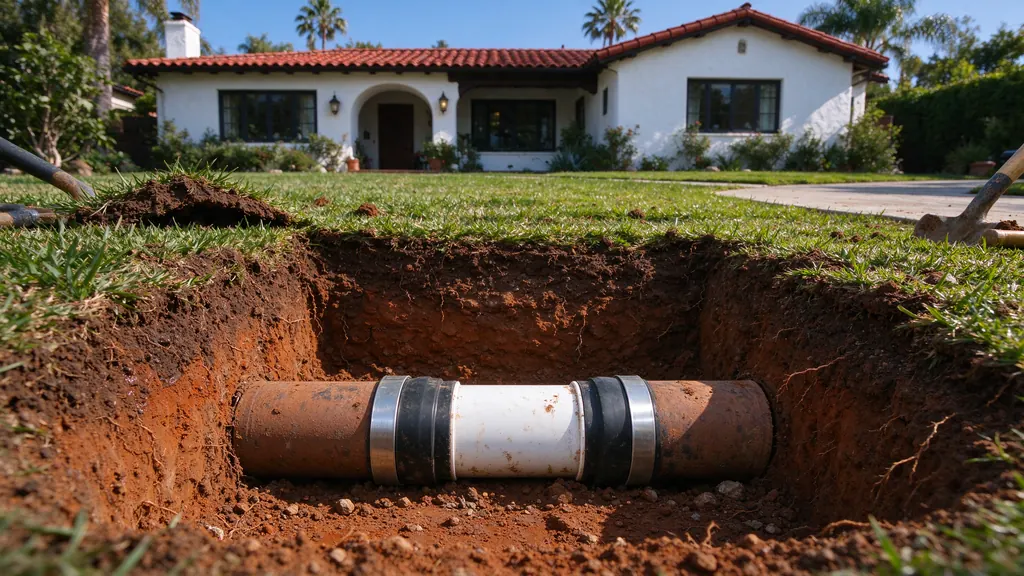
A sewer line spot repair fixes one failed section of a lateral, such as a cracked pipe, an offset joint or a single joint where roots keep getting in, and leaves the rest of the line in place. Angeleno Sewer Line Repair does spot repairs in Los Angeles, Pasadena, Glendale and Burbank by excavating to the defect or by installing a short liner inside the pipe, when the camera shows the rest of the lateral is sound enough to keep.
That last condition is what makes a spot repair honest or not. A single defect in a good line is a small, sensible job. One defect picked out of a line that is failing everywhere is a payment toward the next repair.
What counts as a spot defect
The camera usually finds one of a handful of things.
An offset joint, where one section of pipe has dropped or shifted relative to the next, leaving a lip that catches paper and solids. Small offsets in clay are common and may need nothing; one that has closed a large part of the opening, or that is letting soil in, needs repair.
A crack or a broken section, sometimes from settlement, sometimes from a load such as a vehicle crossing a shallow line, sometimes from a fence post, sprinkler line or other utility driven into it.
A single root-entry joint in an otherwise clean line, often where a tree sits close to one spot on the route. Root cutting clears the pipe, but roots return through the same opening as long as it stays open. A repair at that joint closes the entry point. More on roots in tree roots in sewer line.
A failed transition, such as the joint where cast iron leaving the house meets the clay lateral outside, or an old repair coupling that has loosened.
When a spot repair is the honest answer
The decision rests on everything else the camera saw. A spot repair makes sense when the rest of the lateral shows round pipe, tight joints, no standing water and no other root entries, and when the defect is the clear cause of the problem the house is having.
It stops making sense when the video shows the same kind of defect repeating. Roots at three or four joints in a clay line mean the joints are failing as a group, and fixing one leaves the others. Cast iron that is scaled and thinning along its length will not be saved by replacing the worst foot. A belly beside the defect, or pipe going out of round, points toward replacement of the whole run. The repair vs replacement guide walks through these patterns in more detail.
A useful test is to ask the person scoping the job what they expect the line to need next. If the honest answer is “probably the joint ten feet upstream within a few years,” compare the cost of two spot repairs against one replacement.
Inspect upstream and downstream
A spot repair is only as good as the footage behind the decision. The camera should travel the full lateral before the repair, from the cleanout to the main or as far as it can reach, so the defect is judged in context. After the repair, a second pass should look upstream and downstream of the new section to confirm the transitions are smooth, the slope through the repair is right, and that excavating did not disturb the neighboring joints.
This is also the moment to rule out other causes. A backup can come from a blocked building trap, a branch line inside the house or a problem in the City main. The inspection report guide shows how to read where a defect sits on the footage counter and what the codes mean.
Two ways to make the repair
By excavation. The defect is located from the surface with a transmitter in the camera head and marked with its depth. A hole is dug to the pipe, the failed section is cut out, and new pipe is fitted between the old ends with listed couplings designed for the materials involved. The section is bedded and backfilled in compacted layers so it does not settle into a new low spot. Most spot repairs are shallow enough that the dig is small, but a defect near the street can be deep, and any excavation 5 feet or deeper needs shoring or another protective system under Cal/OSHA rules. Excavation is the right method when the defect is an offset that closes the pipe, a collapse or a short sag. See sewer line excavation.
By sectional point liner. A short liner, typically a few feet long, is saturated with resin, carried on an inflatable packer to the defect and expanded against the pipe until it cures. It seals a crack or a root-entry joint from inside without digging, which helps when the defect sits under a driveway, a slab or a mature tree. It needs the pipe at that spot to be cleanable, round enough to seat the liner and on grade. It cannot lift a dropped joint or fill a sag. See sewer pipe lining.
When the defect is past the property line
In the City of Los Angeles, the owner is responsible for the whole lateral, including the section under the parkway and street. A spot repair there is work in the right-of-way and needs a Bureau of Engineering S-Permit issued to a Bonded Sewer Contractor, City inspection, and a street restoration fee if pavement is cut. Under the Bureau’s general conditions, a camera finding graded Very Poor in the right-of-way means repair is required, and Poor means it is recommended. See street sewer lateral repair.
On private property in the City, replacing any section of the lateral needs an LADBS plumbing permit. Pasadena, Glendale and Burbank set their own rules.
What a sewer line spot repair costs in Los Angeles
Typical budgeting ranges for Los Angeles-area projects, as of October 2026:
- Spot repair by excavation, one section on private property: $1,500–$8,000.
- Camera inspection to find and judge it: $175–$800.
- Lining, if the problem turns out to be the whole line: $135–$250 per foot.
- Full open-trench replacement, for comparison: $5,000 to $25,000 or more.
Depth, concrete or driveway over the defect and any work in the street drive a spot repair toward the top of its range. The replacement cost guide has the wider context. These are budgeting figures, not quotes or company rates.
Spot repairs are performed by licensed, bonded and insured contractor partners, with any work in the right-of-way done by a City of Los Angeles Bonded Sewer Contractor under the S-Permit.
What the work includes
- Camera inspection of the full lateral, not just the trouble spot
- Surface locating of the defect with its depth and footage from the cleanout
- Excavation to the defect, or a sectional point liner where digging is impractical
- Replacement of the failed section with new pipe and listed couplings at each end
- Bedding, backfill and compaction around the repaired section
- A camera pass upstream and downstream after the repair
- Restoration of the dig area, with concrete and hardscape scoped separately
Have a camera report, or a line that keeps backing up?
Phones answered 24/7, every day. Bring the video if you have one.
Related resources
- Sewer Line Repair vs Replacement: How to Decide
- How to Read a Sewer Inspection Report
- Hydro Jetting a Sewer Line vs Repairing It
- Signs of a Broken Sewer Line, and What Else They Could Mean
- How Much Does Sewer Line Replacement Cost in Los Angeles?
- Sewer Lateral Repair Rebate in Los Angeles: Eligibility, Documents and Deadlines
Representative jobsite views
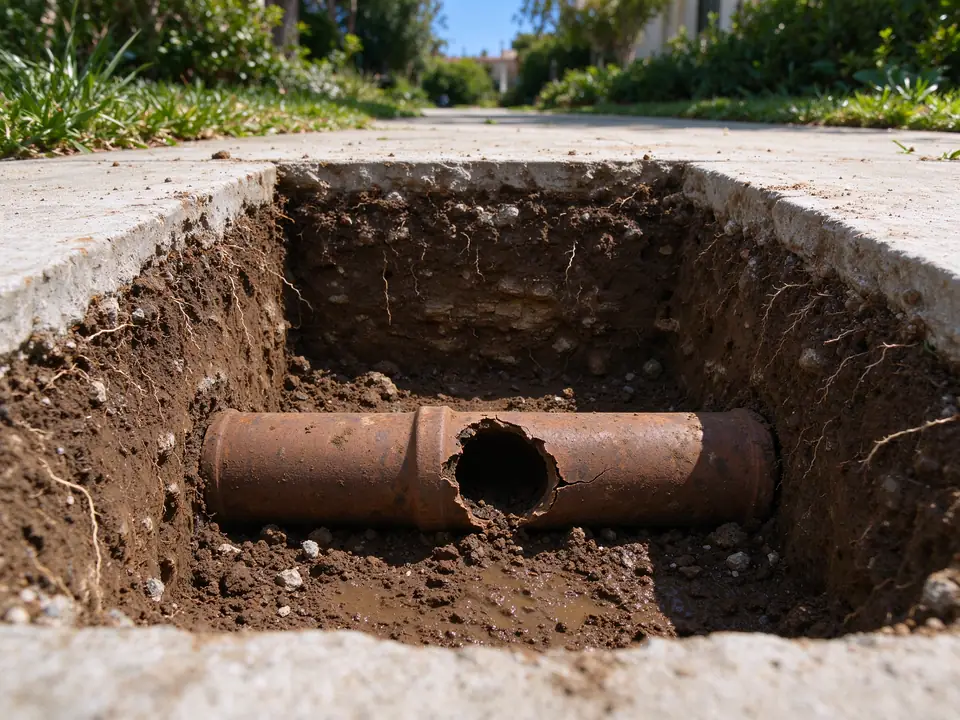
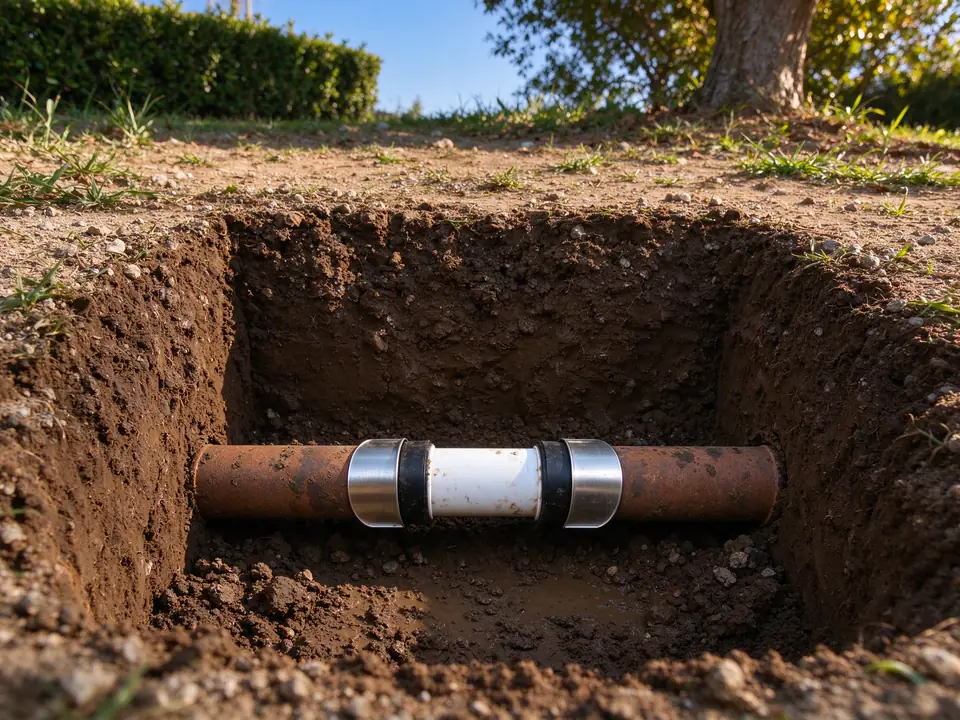
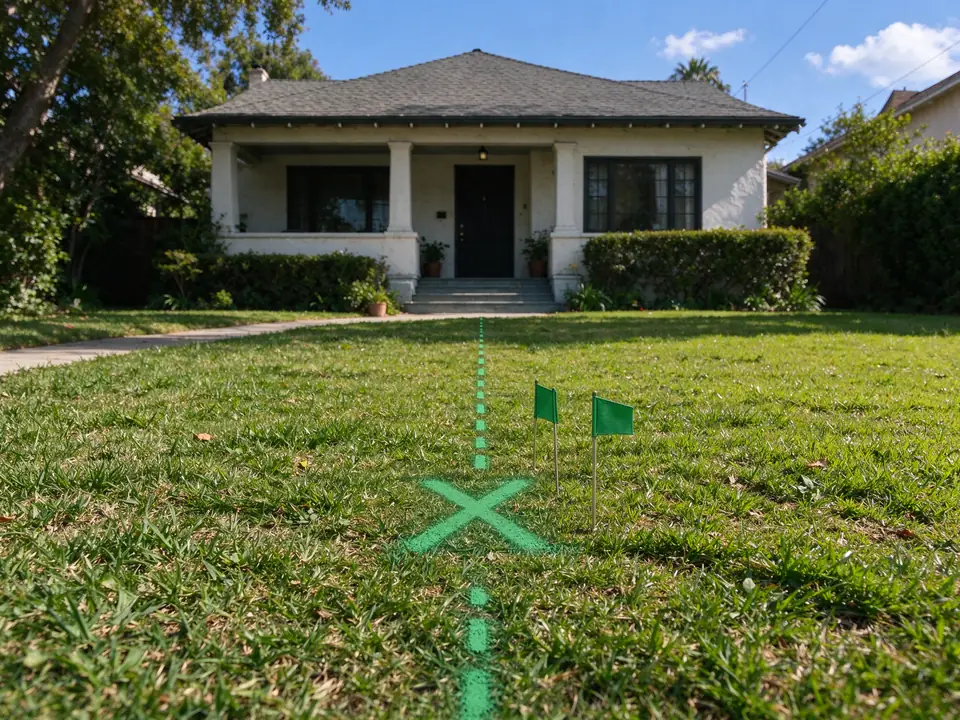
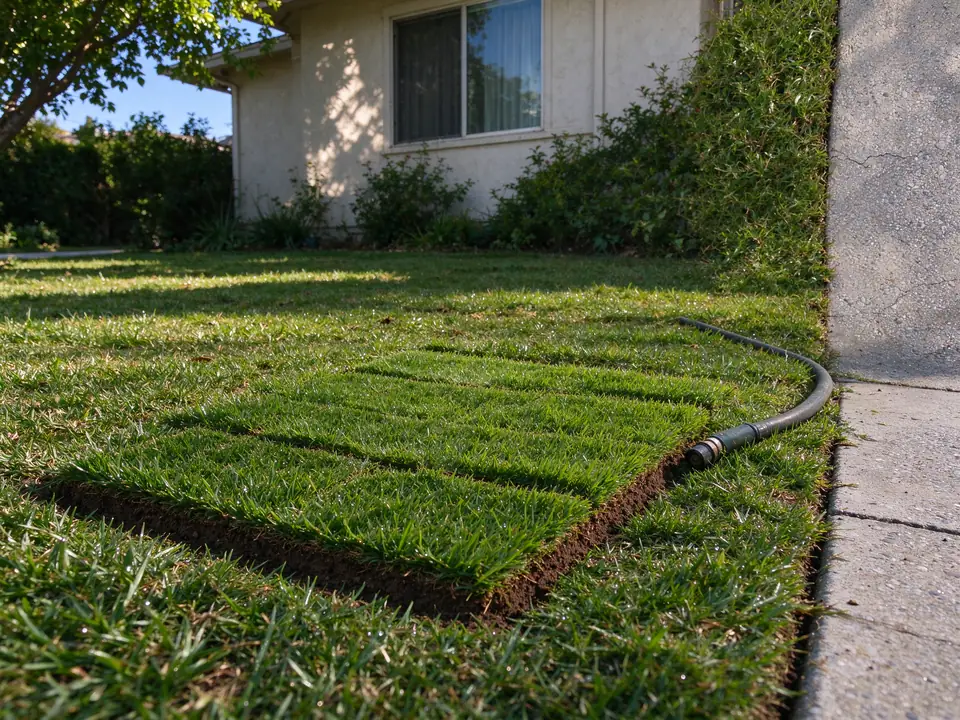
Representative illustrations of this kind of work, not photos of a specific job.
Questions people ask
Can I fix only the bad section of my sewer line?
Often, yes, when the camera shows one defect in a line that otherwise looks sound. If the video shows roots or offsets at other joints, a long belly or cast iron corroding along its length, fixing one spot buys little time. The rest of the line on video, not the worst spot, decides it.
How did a $300 drain cleaning turn into an $8,000 repair?
Clearing a stoppage restores flow; it does not fix why the line stopped. When the camera after cleaning shows a broken joint, an offset or a collapse, the job changes from maintenance to structural repair, with excavation, a permit, inspection and restoration. Ask to see that footage before agreeing to the larger scope.
Is a point liner as good as digging up the bad section?
For the right defect it is a sound repair. A sectional liner seals a crack or root-entry joint in a pipe that is still round and on grade, without a hole in the driveway. It cannot correct an offset that is closing the pipe, a sag or a collapse, which need excavation.
Could my backup be a blocked house trap instead of the lateral?
It could. Clogs in a building trap, a branch line or the drain under the house can look like a lateral problem from inside. That is why the camera should start at the cleanout and show where the blockage or defect actually is before any repair is scoped.
Does the LA rebate cover a sewer spot repair?
LA Sanitation's sewer lateral repair rebate of up to $2,500 is aimed at lateral repairs, not only full replacements. It requires a licensed and bonded sewer contractor, a City-finaled permit within the program's deadline, an itemized paid invoice and the camera video, while each year's funds last.