Last updated:
A sewer camera inspection in Los Angeles is a video survey of your lateral, the private pipe from the house to the City’s main, recorded as a waterproof camera travels the line from the cleanout. Angeleno Sewer Line Repair arranges inspections across Los Angeles, Pasadena, Glendale and Burbank, with each defect measured by distance, located from the surface and written up, so a repair decision rests on what the pipe actually looks like.
That matters because symptoms are poor evidence. A toilet backing into the tub, several slow drains and gurgling all say the shared line downstream is in trouble. They do not say whether the cause is a wad of wipes, roots at one joint, a sag that collects solids, or a section that has lost its shape. People have been quoted for full replacement when the problem was a clog in the building drain, and others have paid to clear the same root mass every year without anyone showing them the joint it grows through. The camera separates those cases.
What happens during the inspection
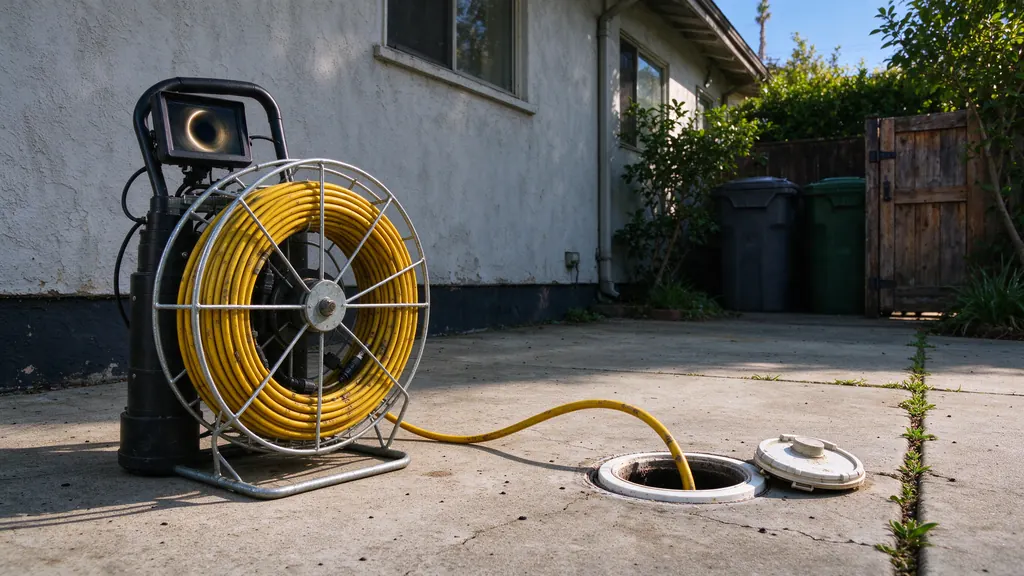
The camera goes in where the line can be reached. In most Los Angeles houses that is the cleanout, a capped riser near the foundation or out toward the property line. If there is no usable cleanout, the options are less tidy: pulling a toilet, entering through a roof vent, or opening the line under the house. Each one limits how far and how cleanly the camera can travel, which is why adding a proper sewer cleanout is often recommended after the first inspection.
From the access point, the camera head is pushed down the lateral on a semi-rigid cable. A counter on the reel records how far it has traveled, and that number becomes the address of every finding: roots at 23 feet, an offset at 41 feet, standing water from 52 to 60 feet. A good operator stops at each joint and transition, rotates or pans where the equipment allows, and keeps going until the camera reaches the City main or is stopped by something it cannot pass.
The camera rarely reaches the main in a single clean run if the line is in poor shape. When it stops short, the reason is the finding: a collapse, a heavy root mass, an offset too large to push past, or a tight bend. The report should say where the camera stopped and why, rather than leaving you to assume the rest of the line is fine.
Why a blocked line is cleared first
A camera cannot see through sewage. If the line is backed up, the operator will usually clear it with a cable machine or a hydro jetter before filming, then run the camera through the flowing line. Clearing a stoppage does not need a City permit in Los Angeles; under LAMC 64.12 a permit is needed only when part of the line is replaced or the street or sidewalk is excavated.
Clearing changes what the camera sees, and that is worth understanding. A cutter removes most of the root mass, so the video afterward shows where roots were entering rather than how thick they had grown. Some operators film briefly before clearing, where they can, to record the blockage itself. Water that stays in one stretch of a cleared, flowing line is a finding in its own right, because it usually means the pipe has sagged there.
Typical budgeting ranges for Los Angeles-area projects, as of October 2026: a standalone inspection through an existing cleanout runs $175–$800, clearing or root cutting $198–$1,016, and hydro jetting $300–$800. These are not quotes or company rates; access, the condition of the line and how much locating is needed move the number. The camera inspection cost guide breaks those factors down.
Locating the line and reading its depth
Footage alone tells you how far a defect is from the cleanout, not where it is on your property. Laterals curve, angle under driveways and change direction at fittings. To put a defect on the ground, the camera head carries a small transmitter called a sonde. A technician on the surface sweeps a receiver until it finds the signal, marks the spot, and reads an estimated depth.
That depth reading shapes the repair. A defect 3 feet down under a lawn is a modest dig. One 7 feet down beside the foundation means a trench that must be shored or otherwise protected under Cal/OSHA and federal OSHA rules, because trenches 5 feet and deeper need protective systems. It also tells you which side of the property line the problem is on. In the City of Los Angeles you are responsible for the lateral on both sides, but a defect past the property line, in the public right-of-way, brings a City S-Permit and a Bonded Sewer Contractor into the job. See sewer lateral repair under the street.
Sonde readings are estimates. Metal pipes, rebar in a slab, nearby utilities and steep grades can all distort them, and the reading is to the camera head rather than the top of the pipe. Locate marks are good enough to plan from; they are not a survey. Our guide to how deep a sewer line runs covers the typical range in Los Angeles.
What the report should contain
An inspection is only as useful as what you can take away from it. Ask for these, in writing:
- The property address and date, shown or spoken at the start of the video
- The access point used and the direction the camera traveled
- Pipe material and diameter, and the footage of each transition, such as cast iron to clay outside the foundation
- Each observation by footage: roots, cracks, offsets, scale, standing water, deformation
- Located positions and estimated depths for anything that may need repair
- Where the camera stopped, and whether it reached the main
- Recommendations kept separate from observations
That last point is the one people skip. “Roots at the joint at 23 feet” is an observation. “Replace the lateral” is a recommendation, and it should be traceable to specific observations on the video. NASSCO, the trade association for pipeline rehabilitation, publishes a standardized defect-coding system, the Pipeline Assessment Certification Program, used widely on municipal mains. Residential reports often use plain language instead, which is fine as long as each finding is tied to a footage and a timestamp. The inspection report guide walks through common findings.
Checking that the footage is your line
It is a fair question, and owners ask it. The simplest safeguards are to watch the inspection while it happens, or at least the start of it, and to insist on the address appearing at the beginning of the recording with the footage counter running without breaks. Locate marks painted on your own yard tie the video to your ground. Details on the video should match the property: the material change where the house drain meets the lateral, a total length that fits the distance to the street, and the connection at the main at roughly the right footage.
Red flags are a video with cuts and no counter, footage that starts mid-line with no access point shown, or a report with no distances. None of those prove anything is wrong, but each makes the video harder to rely on, and you are entitled to ask for a clean run.
How the City grades lateral video
When a lateral is filmed as part of a City of Los Angeles S-Permit, such as before lining or bursting in the street or before reconnecting a capped line, the Bureau of Engineering’s inspector grades the footage and must be present during the CCTV. The grades are:
| BOE grade | What it describes | What follows |
|---|---|---|
| Excellent | No cracks, offsets or root intrusion | No repair recommended |
| Fair | Minor cracks, offsets or roots, or the line in good working condition | No repair recommended |
| Poor | Moderate cracks or offsets, extensive roots, or a blocked line, with the main not compromised | Repair or root clearing recommended; required for cement or other non-standard pipe |
| Very Poor | Major cracks, offsets, collapse, or the main compromised | Repair is required |
A private inspection is not graded by the City, and its wording may differ. The scale is still a useful reference point, because it shows where the City itself draws the line between maintenance and mandatory repair.
What the findings usually lead to
Findings point toward repairs, but they do not settle them on their own. Roots at one joint in otherwise sound clay may justify periodic clearing or a spot repair of that joint; roots at joint after joint point toward lining or replacement. An offset needs to be judged for severity, since a large one can stop a liner from being installed. Standing water that marks a belly will not be corrected by lining, which follows the shape of the old pipe; the slope usually has to be rebuilt by excavation. A section that has lost its shape rules lining out and leads to a collapsed line repair. And a clean video is a result too: if the line is sound, the problem was likely a clog, and clearing was the right fix.
The LASAN CCTV rebate
LA Sanitation offers a rebate of up to $300 toward a lateral camera inspection, first come, first served until each year’s funds run out. It is open to property owners who pay the City of Los Angeles sewer service charge, including residential, multifamily, commercial and industrial property. The inspection must be done by a licensed and bonded sewer contractor, and the CCTV must have been completed no more than six months before you apply.
The application goes through MyLA311 under “Sewer or Sidewalk Rebates.” LA Sanitation asks for the paid, itemized invoice showing the contractor’s license number, the work date and your address; a copy of the video with your address at the beginning; the written inspection report; a recent DWP bill; your APN; a signed release; and a W-9 once approved. Ask for those documents at the time of the inspection rather than chasing them later. Properties in Pasadena, Glendale and Burbank are on their own cities’ sewer systems, so the City of LA rebate does not reach them. The rebate guide covers both LASAN rebates.
When an inspection is worth ordering
The clearest cases are after a backup, after roots have been cleared more than once, during escrow on a house (see sewer inspection when buying a house), and before paving, adding an ADU or remodeling over the line’s route. Inspections are performed by licensed, bonded and insured contractor partners, and the video and report are yours to keep.
What the work includes
- Access through the existing cleanout, or a plan for access where there is none
- Clearing the line first when standing water or a blockage would hide the pipe
- Full-length video with a running footage counter and the property address recorded at the start
- Surface locating of the camera head, with defects and depth marked on the ground
- A written report listing each observation by distance from the access point
- Pipe material, diameter and transitions noted, including where cast iron meets clay
- A copy of the video and report in a form you can keep, share or attach to a LASAN rebate application
Have a camera report, or a line that keeps backing up?
Phones answered 24/7, every day. Bring the video if you have one.
Related resources
- How Much Does a Sewer Camera Inspection Cost in Los Angeles?
- How to Read a Sewer Inspection Report
- Sewer Lateral Repair Rebate in Los Angeles: Eligibility, Documents and Deadlines
- How Deep Is a Sewer Line?
- Signs of a Broken Sewer Line, and What Else They Could Mean
- What Is a Sewer Lateral? A Los Angeles Owner's Guide
Representative jobsite views
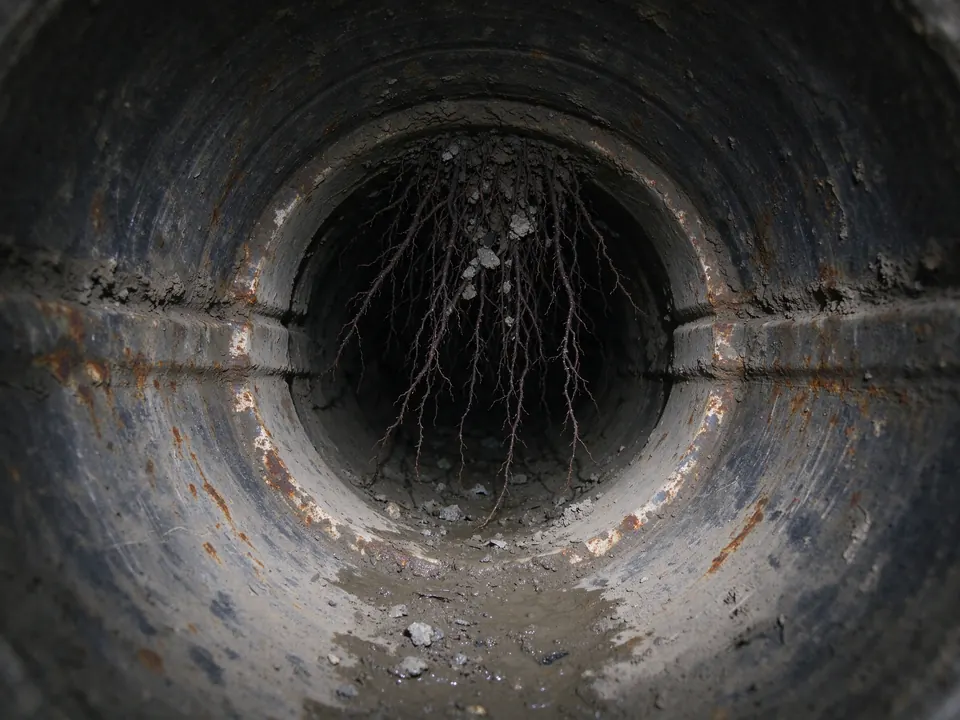
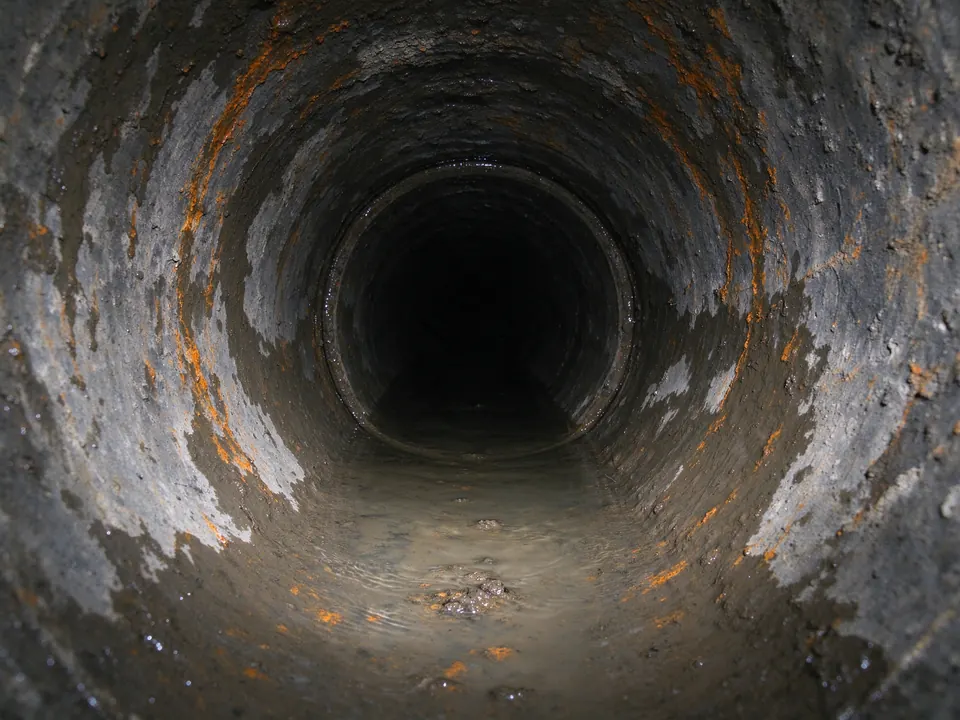
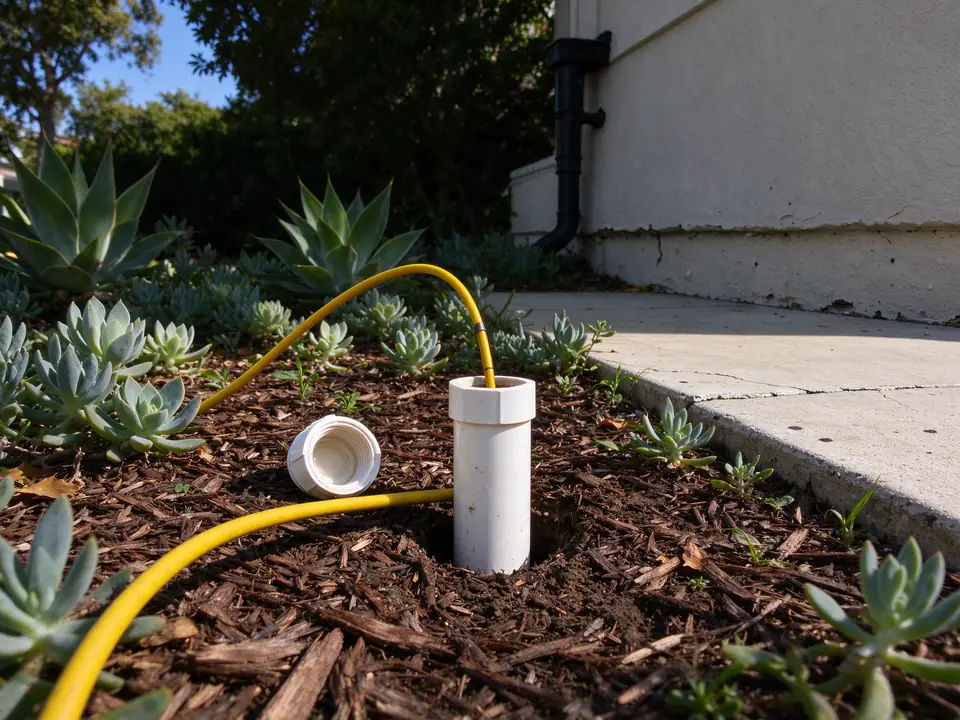
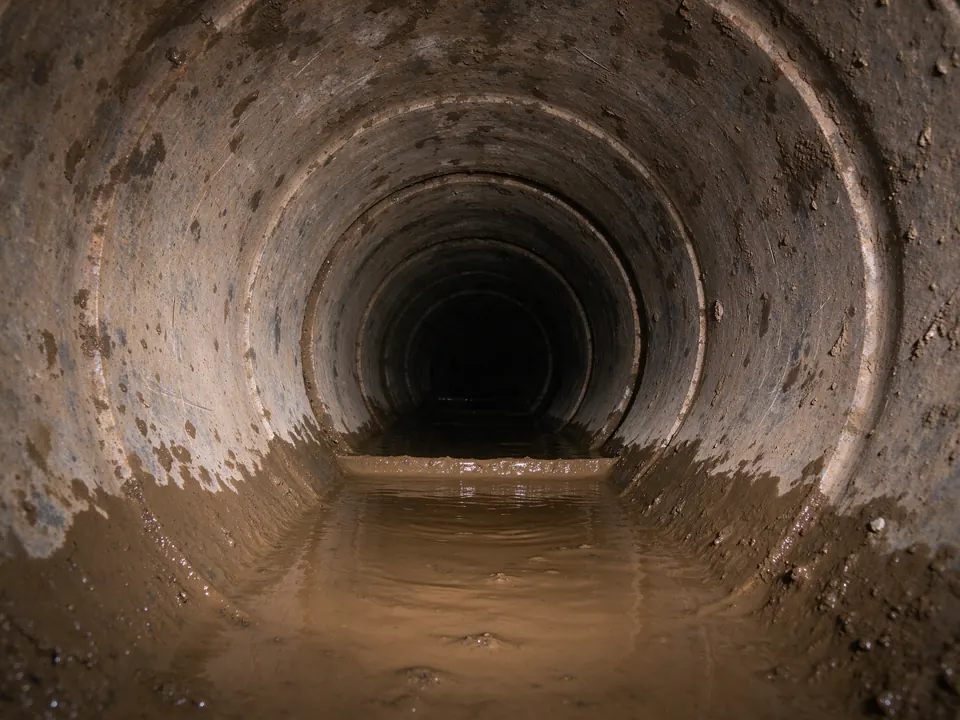
Representative illustrations of this kind of work, not photos of a specific job.
Questions people ask
How much does a sewer camera inspection cost in Los Angeles?
The typical budgeting range for a standalone inspection through an existing cleanout is shown on this page and in the camera inspection cost guide; it is a Los Angeles-area range as of October 2026, not a quote. Clearing a blockage first, adding access or extended locating can add to it. City of LA sewer ratepayers may be able to claim up to $300 back through LA Sanitation's CCTV rebate while funds last.
Can a camera see through a backed-up sewer line?
Not usefully. A camera pushed into standing sewage shows murky water and little else, so a blocked line is usually cleared first. Water that remains after clearing can itself be a finding, because water sitting in one stretch of a flowing line often points to a belly.
How do I know the camera footage is really of my line?
Watch the inspection live if you can, and ask for the property address to be shown or spoken at the start of the recording, with the footage counter running continuously. Ask for the locate marks to be painted on your own ground. LA Sanitation's rebate requires the address at the beginning of the video for the same reason.
How deep is my sewer line, and can the camera tell?
A transmitter in the camera head lets a receiver on the surface estimate its position and depth at any point along the line. The reading is an estimate and can be thrown off by metal, rebar or nearby utilities, but it is usually close enough to plan a repair and decide whether a trench would need shoring.
Do I need a camera inspection if the drain is flowing again?
If the line backed up once and has been cleared, filming it tells you whether the cause was a one-off clog or a defect that will catch the next one. Roots, an offset joint and a belly can all let a line flow for months before it stops again. The video answers that; the restored flow does not.