Last updated:
Emergency sewer line repair in Los Angeles usually starts as a clearing job, not a construction job: sewage is coming up a drain, and the first task is to stop adding water, work out whether the blockage is yours or the City’s, and restore flow. Angeleno Sewer Line Repair takes those calls across Los Angeles, Pasadena, Glendale and Burbank, and phones are answered 24/7. What happens after flow is back depends on what the camera finds.
The distinction matters because a backup at night feels like a broken pipe, and sometimes it is. More often it is a stoppage in a line that still has its shape. LA Sanitation attributes more than half of sewer backups to tree roots and fats, oils and grease, and both of those are cleared, at least for now, without digging anything up.
The first hour
Stop using water. Nothing pumps sewage out of an ordinary house. If the lateral is blocked, every flush, shower, load of laundry and dishwasher cycle goes to the lowest open drain, which is usually a ground-floor shower, tub or floor drain. Tell everyone in the building, including residents in other units on the same line. An irrigation system does not feed the sewer, so it can be left alone.
Keep people and pets out of the water. Sewage carries bacteria and viruses. Keep children and animals away, wear gloves and boots if you have to walk through it, and wash thoroughly afterward. Do not wade into standing water that reaches outlets, extension cords or appliances; turn off a circuit only if you can reach the panel from a dry place.
Do not reach for drain cleaner. It will not clear a lateral, and it leaves caustic water in the drain for whoever opens it next.
Take photos. Pictures of where the water came from and how far it spread are useful for an insurance claim, and for the person clearing the line. Policies vary widely on backups; our guide on whether homeowners insurance covers the sewer line explains what to look for.
Is it the City’s main or your lateral?
Los Angeles splits responsibility at the main. The City maintains the public sewer in the street. The property owner is responsible for the entire lateral, from the building to the connection at the main, including the part under the pavement. A backup can start in either.
Look outside before you call anyone. If neighbors on the same side of the street are backing up at the same time, or sewage is rising from a manhole in the street, the main is the likely cause. Call LA Sanitation’s 24-hour line at 1-800-773-2489; that is the City’s problem to clear, and a private contractor cannot work on the main. Sewage reaching the gutter or a storm drain should be reported to the same number, because storm drains in Los Angeles run untreated to the river and the ocean.
If only your building is affected, the blockage is almost certainly in your lateral or the building drain under the house. Pasadena, Glendale and Burbank handle their own mains, so outside the City of LA call your city’s public works or sewer line for a main problem.
Reading the cleanout
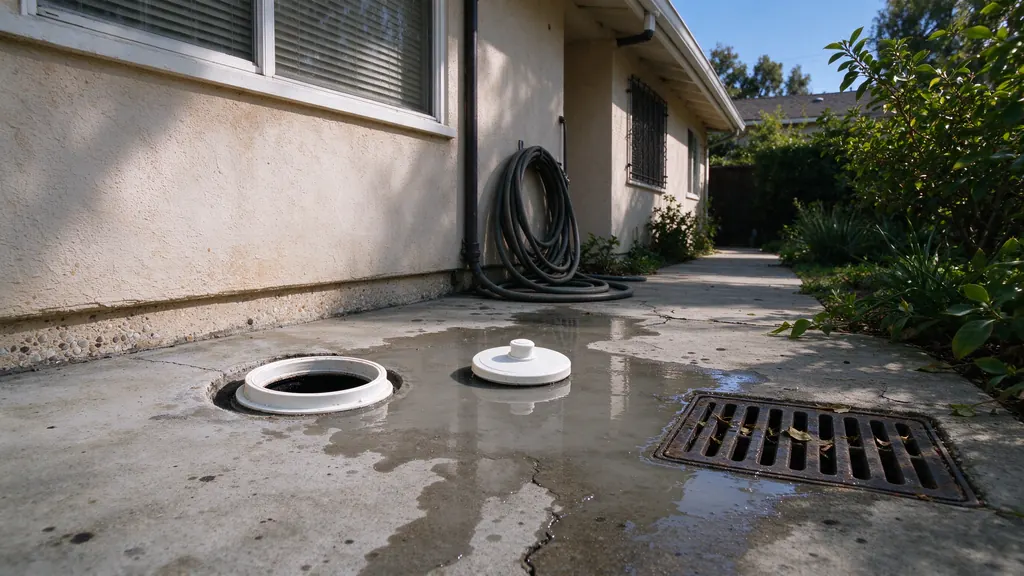
The cleanout, a capped pipe outside near the foundation or at the property line, tells you roughly where the blockage is. If the cleanout is full of water or seeping around the cap, the blockage is downstream of it, between the cleanout and the main. If the cleanout is dry while the house backs up, the blockage is more likely upstream, in the building drain under the house or a branch line. A blocked house trap, found in some older homes, can do this too, and it is a much smaller job than a lateral repair.
Be careful with the cap. A cleanout on a line full of sewage is under the pressure of everything above it, and loosening the cap can release that water forcefully. If you are not sure, leave it for the person clearing the line. If you cannot find a cleanout at all, that is useful to say on the phone, since the work may need to start from a toilet or a roof vent, and adding a proper sewer cleanout may be part of the follow-up.
Clearing is not the same as repair
The emergency fix is almost always to restore flow. A cable machine with a cutting head bores through a blockage and cuts roots; a hydro jetter scours the pipe wall with high-pressure water, which suits grease and fine roots. The hydro jetting guide compares the two. In the City of Los Angeles, clearing a stoppage does not need a permit; LAMC 64.12 requires one only when part of the line is replaced or the street or sidewalk is excavated.
Clearing does not fix anything structural. If roots came in through an open joint, the joint is still open and the roots will return. If solids settled in a sag, the sag is still there. That is why the line should be filmed once it is flowing: the camera inspection shows whether the night’s backup was a one-off or the first sign of a defect. A recurring clog is a reason to film, not proof that the line has collapsed.
Typical budgeting ranges for Los Angeles-area projects, as of October 2026: clearing or root cutting runs $198–$1,016, hydro jetting $300–$800, and a camera inspection $175–$800. These are not quotes or company rates. Ask whether a visit outside ordinary hours is priced differently before work starts, and whether the camera is included or separate.
When the emergency is structural
Some calls really are repair emergencies. The signs that clearing may not be enough:
- The cable or jetter will not pass a point, or comes back with soil, gravel or pieces of clay pipe
- The line clears and stops again within hours or days
- Sewage is surfacing in the yard, or a depression or sinkhole is opening over the line’s route
- The camera shows a section that has lost its shape or broken apart
A collapsed section cannot be lined, and it usually has to be dug out or replaced by bursting. In the short term the goal is to get the building usable again, which can mean partial flow through the damaged section, limited water use, or bypassing the damaged section temporarily while the repair is planned and permitted. A temporary measure should be described as temporary in writing.
Excavating a failed lateral is safety-critical work. Laterals in Los Angeles are often 4 feet or more deep by the property line, and trenches 5 feet and deeper need shoring or another protective system under Cal/OSHA and federal OSHA rules. Soil around a broken sewer is often saturated and weaker than it looks. Nobody should step into an unprotected trench to look at the pipe, however urgent the night feels.
If the failure is under the street
If the camera shows the break past the property line, in the lower lateral, the repair is still the owner’s, and it still needs a Bureau of Engineering S-Permit issued to a City Bonded Sewer Contractor. The emergency does not change who can legally open the street. It does change the order of operations: flow may be restored by clearing while the permit, traffic control and inspection are arranged. See sewer lateral repair under the street for how that work runs.
If a sinkhole or settlement is opening in the street itself, report it to the City right away through 311 or the LA Sanitation line, because a failed lateral under pavement can undermine the road.
After the water is gone
Once the line flows, cleanup and repair are separate decisions. Porous materials soaked by sewage, such as carpet pad and drywall, often have to be removed, and a large backup may justify a water damage professional. On the sewer side, keep the video, the invoice and any written finding. If a repair follows in the City of Los Angeles, LA Sanitation’s rebates, up to $300 for a camera inspection and up to $2,500 for a permitted repair while funds last, depend on that paperwork. The sewer backup guide covers cleanup in more detail.
Clearing and repair work are performed by licensed, bonded and insured contractor partners, and anything in the public right-of-way by a City of Los Angeles Bonded Sewer Contractor under an S-Permit.
What the work includes
- Phone triage: where the water is appearing, which fixtures are affected, and whether neighbors or the street are involved
- Clearing the stoppage by cable machine or hydro jetter to restore flow
- A camera inspection once the line is flowing, so the cause is on video before any repair is proposed
- Temporary measures where a section has collapsed and flow cannot be fully restored
- A written scope for any structural repair, kept separate from the emergency clearing
- Permits where the repair requires them, including an S-Permit and Bonded Sewer Contractor for work in the street
Have a camera report, or a line that keeps backing up?
Phones answered 24/7, every day. Bring the video if you have one.
Related resources
Representative jobsite views
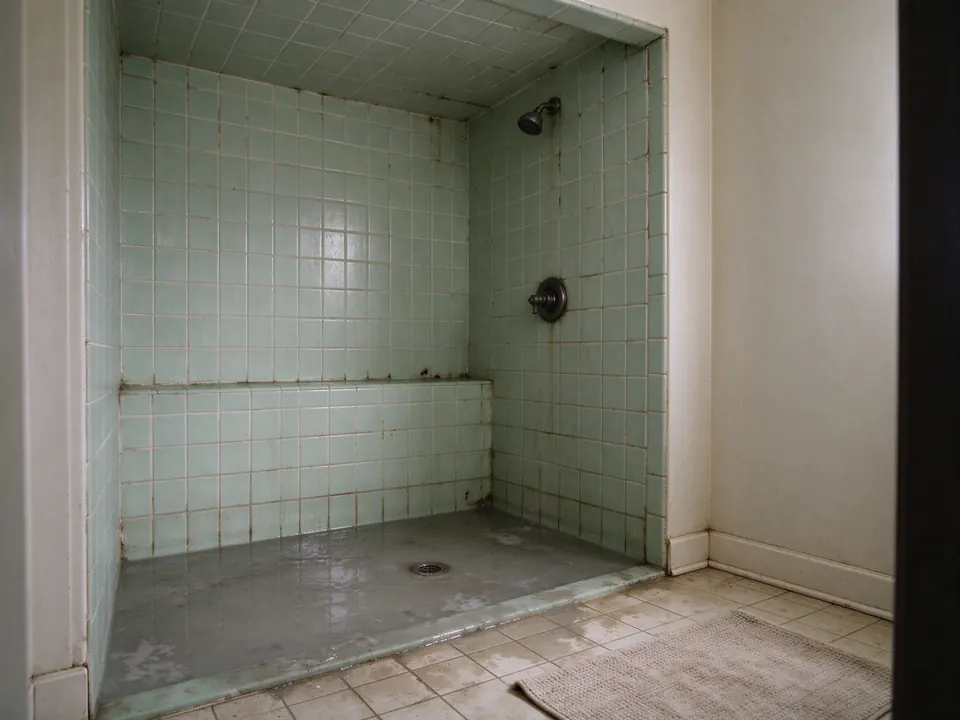
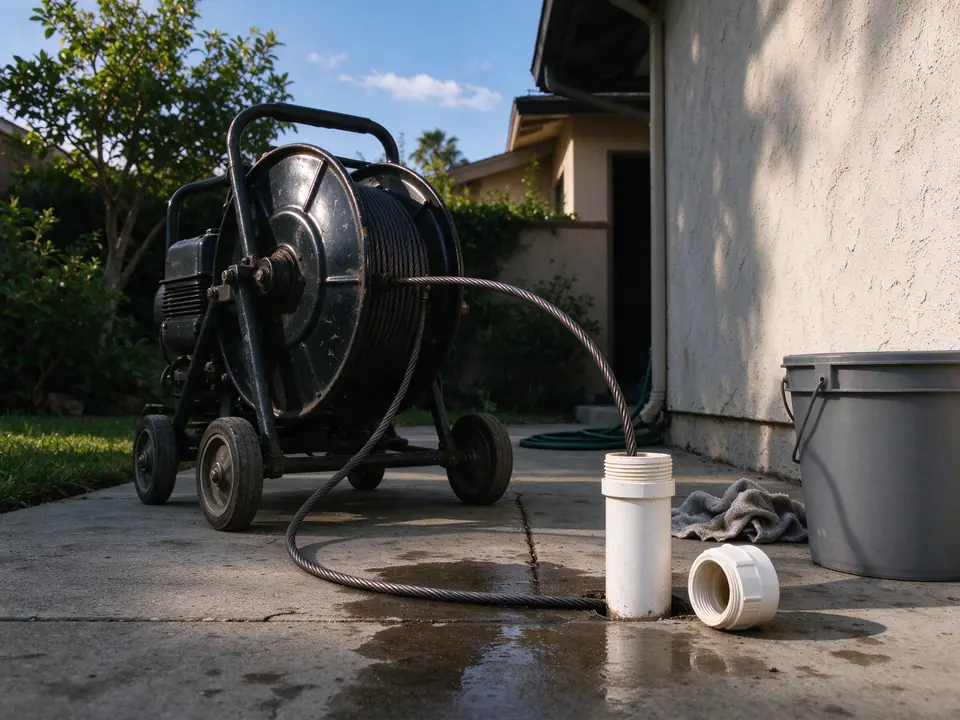
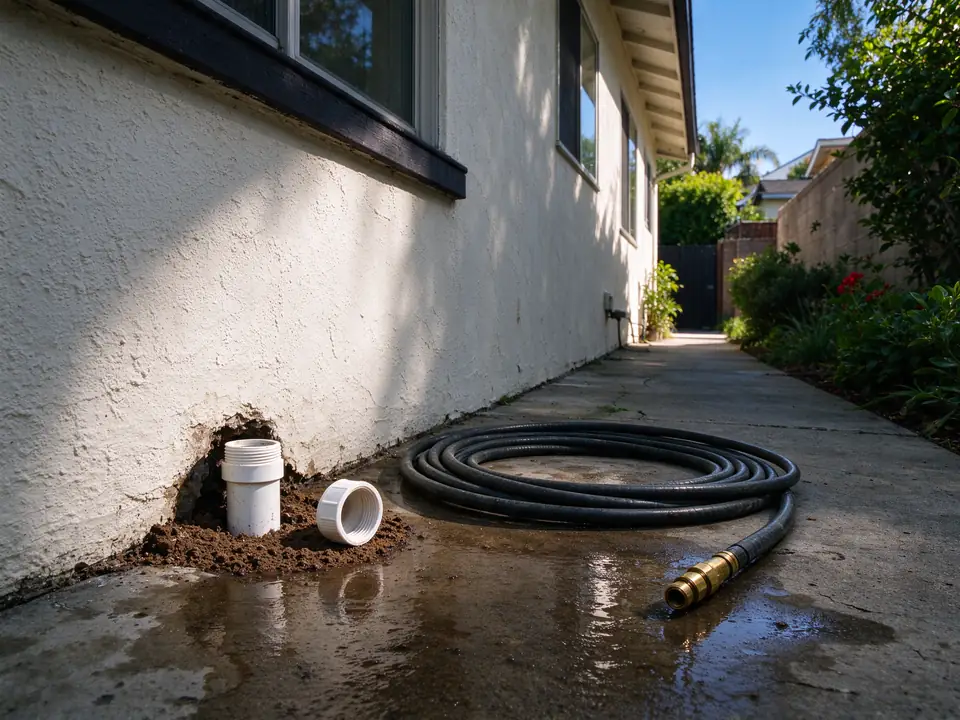
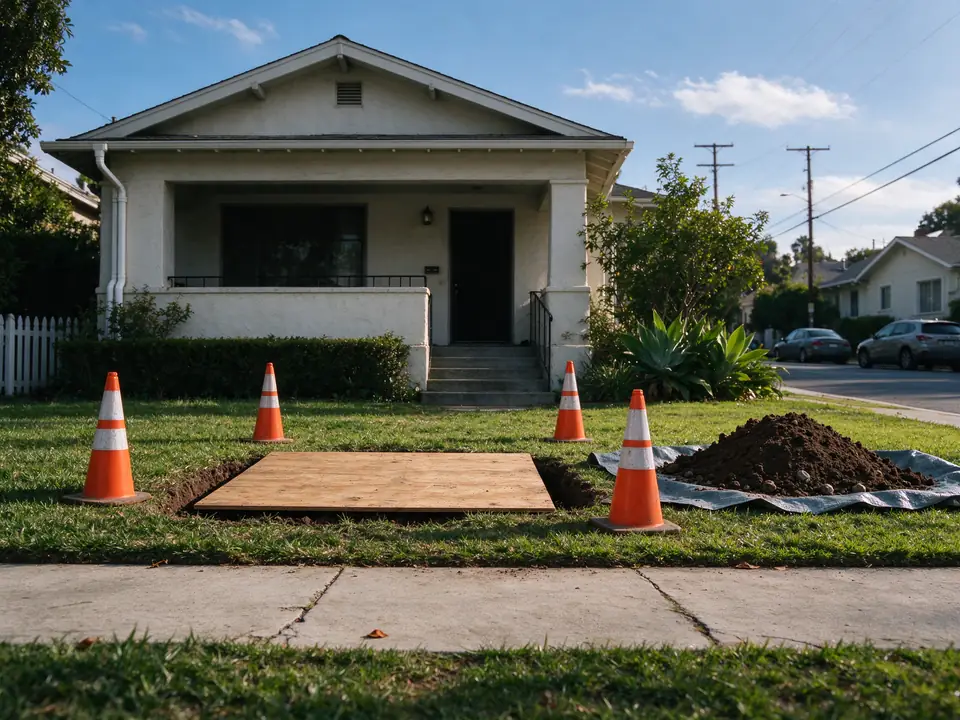
Representative illustrations of this kind of work, not photos of a specific job.
Questions people ask
What should I do first when sewage backs up into my house?
Stop using water everywhere in the building: no flushing, showers, laundry or dishwasher. Every gallon you send down has nowhere to go but the lowest drain. Keep children and pets away from the water, stay out of standing water near outlets or appliances, then work out whether the problem is yours or the City's.
How do I know if the backup is the City's sewer main or my line?
If neighbors are backing up too, or sewage is coming out of a manhole in the street, the City main is the likely cause, and LA Sanitation's 24-hour line is 1-800-773-2489. If only your property is affected, the blockage is most likely in your lateral or building drain, which is the owner's to fix.
Is a sewer backup always a broken pipe?
No. Many emergencies are stoppages: wipes, grease or a root mass blocking a line that is otherwise intact. Clearing restores flow and does not need a City permit. The camera afterward shows whether there is a defect that caused it, such as roots at an open joint or a sag, or whether it was a one-off clog.
Should I pour drain cleaner down a backed-up sewer?
No. Chemical drain cleaners rarely clear a lateral-level blockage, and they leave caustic water standing in the drain, which then splashes onto whoever clears the line. If you have already used one, say so when you call.
Can an emergency sewer repair in the street skip the permit?
Do not plan on it. Work on the lower lateral in the City of Los Angeles right-of-way needs a Bureau of Engineering S-Permit issued to a Bonded Sewer Contractor. Clearing a stoppage is exempt, but excavating the street or sidewalk is not. Any bid for street work should say how the permit is being handled.