Last updated:
Cast iron sewer line replacement usually means replacing the building drain that runs under the house, and often the first stretch of lateral outside, after decades of internal corrosion have left it scaled, channeled or cracked. Depending on how much sound wall remains, the pipe is either descaled and lined in place or removed and replaced, typically with plastic pipe. Angeleno Sewer Line Repair handles cast iron work across Los Angeles, Pasadena, Glendale and Burbank, and the remaining wall is what the camera is there to judge.
Cast iron is a different problem from clay. Clay fails at its joints and stays sound in between. Cast iron fails along its length, from the inside out, and the worst of it is usually where it is hardest to reach.
How cast iron fails
Cast iron is strong, heavy and quiet, which is why it was widely used for drains inside buildings. Its weakness is corrosion. Wastewater, the gases it gives off and the oxygen in a partly full pipe all attack the iron from the inside. Several things result, and they tend to appear together.
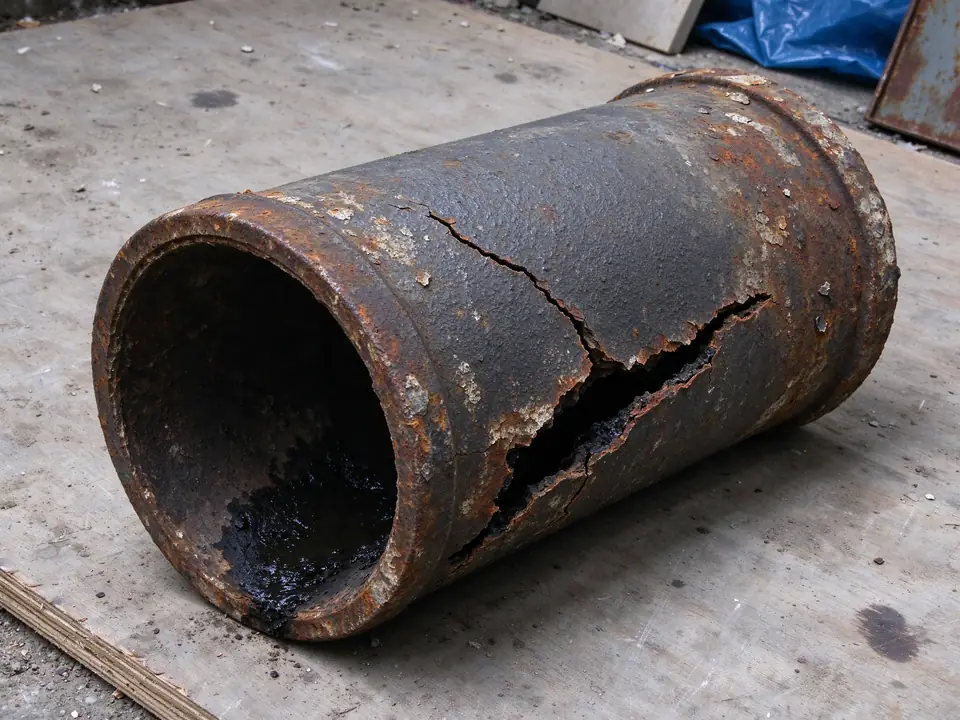
Scale and tuberculation. Corrosion products build up on the pipe wall as rough, lumpy deposits. They narrow the pipe and catch paper and grease, so a scaled line clogs more often even before it leaks. On camera, scale looks like a bumpy, rust-colored crust, sometimes with dangling growths.
Channeling. Flow runs along the bottom of the pipe, the invert. Over decades, corrosion and abrasion there wear a groove along the length of the pipe while the top stays comparatively thick. On camera it can look like a trough or a dark seam along the bottom, and in an advanced case the bottom is simply gone and soil or the trench floor is visible.
Longitudinal cracks. As the bottom thins, the pipe can split lengthwise. A crack that runs for feet along the invert lets water out into the soil or crawlspace and can undermine the bedding beneath it.
Failed joints and fittings. Older cast iron used hub-and-spigot joints packed with oakum and lead. Joints can loosen, and fittings such as wyes and bends can corrode faster than straight pipe.
Not every old cast iron line is in this state. Some films with light scale and a sound invert. Age is a reason to inspect; the footage decides.
Building drain versus lateral
Plumbing codes draw a line between the building drain, which collects the house’s drainage under the floor or in the crawlspace, and the building sewer, the lateral, which begins a short distance outside the foundation and runs to the public sewer. Pasadena’s code, for example, defines the house sewer as starting 24 inches outside the building wall.
The distinction matters for three reasons. It shapes what is being permitted and inspected. It affects access, because the building drain is under the house and the lateral is under the yard. And when a camera report says “the sewer line,” it is worth asking which section it means, because a scaled building drain under a slab and a cracked clay lateral at the street are very different projects.
Cast iron often runs from under the house to a point just outside the foundation and then transitions to clay or another material for the rest of the lateral. In the City of Los Angeles the owner is responsible for all of it, including the lower lateral under the street.
Under a crawlspace, under a slab
Crawlspace houses are the easier case. The pipe can be reached from below the floor, the old cast iron cut out in sections and new pipe hung or supported at the proper slope. The constraints are clearance, access openings and working conditions in the crawlspace, but no concrete has to be broken.
Slab-on-grade houses are harder. The building drain is buried in soil under the concrete. There are three broad approaches:
- Lining from inside. If the pipe can be descaled and still has enough wall, a liner can be installed from a cleanout without opening the floor. Branch connections have to be reopened from inside the liner, and the line needs a usable access point; if there is none, cleanout installation comes first.
- Cutting the slab. A narrow trench is cut through the concrete along the pipe route, the old pipe replaced and the slab patched. It is direct, but it disturbs whatever flooring and rooms are above.
- Tunneling. Digging under the foundation from outside avoids the interior floor. It is slow, labor-heavy and limited by the length of the run and soil conditions.
Which one fits depends on the pipe’s condition, where it runs, how many branches tie in and what is built over it. A line under a kitchen with stone floors is a different calculation from one under a garage.
Descaling and whether lining is possible
Descaling uses rotating chain or cutting heads on a flexible shaft to grind scale and tubercles off the pipe wall. It is done for two reasons: to restore flow in a line that is otherwise sound, and to prepare the pipe for lining. It also gives a far better camera view of the actual wall.
Descaling is where the truth about a cast iron line comes out. Under heavy scale there may be a sound wall, or there may be a channel worn through, holes and cracks. Aggressive descaling of very thin pipe can open it up further, which is one reason the operator works in stages and keeps checking on camera.
Sewer pipe lining needs a host that still holds its shape and can carry the liner through the cure. Scaled cast iron with a sound invert is often a good candidate. Pipe with the bottom missing over long stretches, or cracks that let soil in, is not, at least not until those sections are replaced. A liner also follows the existing slope, so a sagging building drain stays sagging. An honest lining proposal for cast iron says what the post-descaling video showed, not just what the scale looked like.
The transition to clay outside
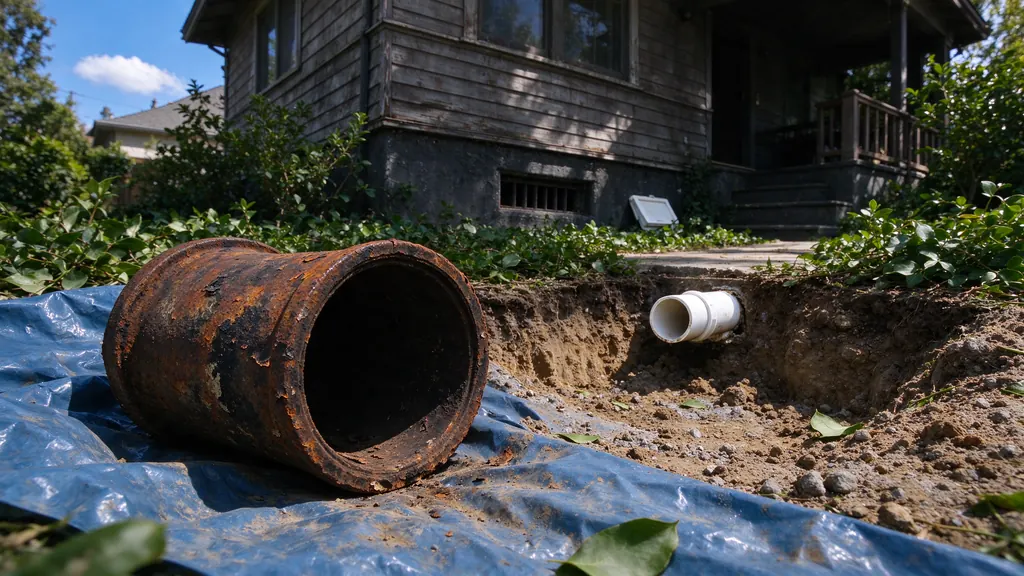
Where cast iron meets clay outside the foundation is one of the most common weak points on a lateral. The two materials have different outside diameters and behave differently as the soil moves, and the old joint was often packed with mortar that has since cracked. Roots and settlement find it.
When cast iron is replaced, the new pipe is joined to whatever comes next with a listed transition coupling made for that pairing and clamped to both sides. If the clay beyond the transition films well, it can stay. If it shows root entry or offsets, replacing it in the same project usually costs less than coming back later. See clay sewer pipe replacement for how that section is judged.
What a cast iron replacement includes
A typical project runs in this order: a camera inspection through the building drain and lateral, often with descaling to see the wall; locating the pipe route under the house; choosing the method; pulling the LADBS plumbing permit; the work itself, with the house’s drains out of service for part of it; City inspection before anything is covered; and a post-work video. If the replacement extends to the lower lateral under the street, that section also needs a Bureau of Engineering S-Permit and a City Bonded Sewer Contractor; the permit guide explains who pulls which permit.
Any exterior excavation 5 feet or deeper needs shoring or another protective system under Cal/OSHA and federal OSHA trench rules.
Cost drivers for cast iron
There is no reliable published price for cast iron replacement as such, and a material-specific figure would be a guess. The cost is driven by access and scope:
- Where the pipe runs. Crawlspace access is usually the least disruptive; under-slab work adds concrete cutting or tunneling and floor restoration.
- Length and branches. More pipe, and more fixture branches to reconnect, means more work whether it is replaced or lined.
- Condition after descaling. Pipe that can be lined avoids opening the floor; pipe that cannot pushes the job toward excavation.
- What is above it. Finished flooring, cabinets and built-ins add restoration that a bid should list separately.
- Whether the clay lateral is included. Combining the outdoor section with the indoor work changes the scope and the method mix.
The replacement cost guide gives budgeting ranges by method, and the repair vs replacement guide helps weigh fixing a section against the rest of an aging line.
Who does the work
Cast iron replacement is performed by licensed, bonded and insured contractor partners. Any work on the lower lateral in the public right-of-way is done by a City of Los Angeles Bonded Sewer Contractor under the S-Permit.
What the work includes
- Camera inspection of the building drain and lateral, with the cast iron sections and the transition to clay located
- Assessment of scale, channeling, cracks and holes, and an opinion on remaining wall condition
- Mechanical descaling where lining or a clearer inspection is the goal
- Replacement by crawlspace access, slab cut, tunneling or exterior trench, or lining where the pipe allows
- Listed transition couplings to clay, PVC or the remaining cast iron
- Permit, City inspection and a post-work video
- Patching of the access points, with flooring and finish restoration scoped separately
Have a camera report, or a line that keeps backing up?
Phones answered 24/7, every day. Bring the video if you have one.
Related resources
Representative jobsite views
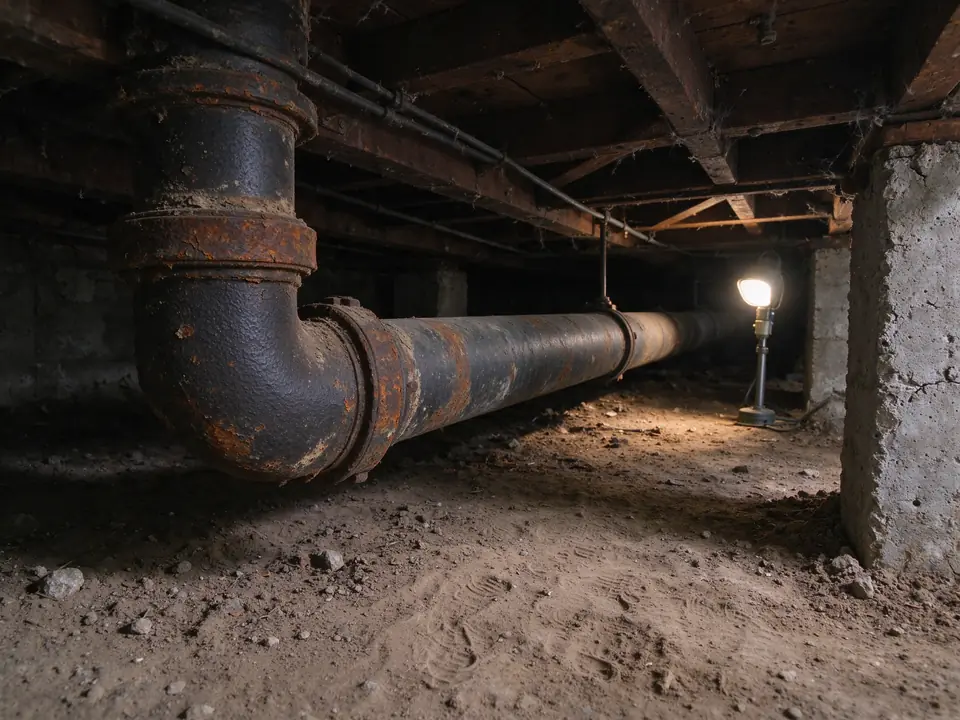
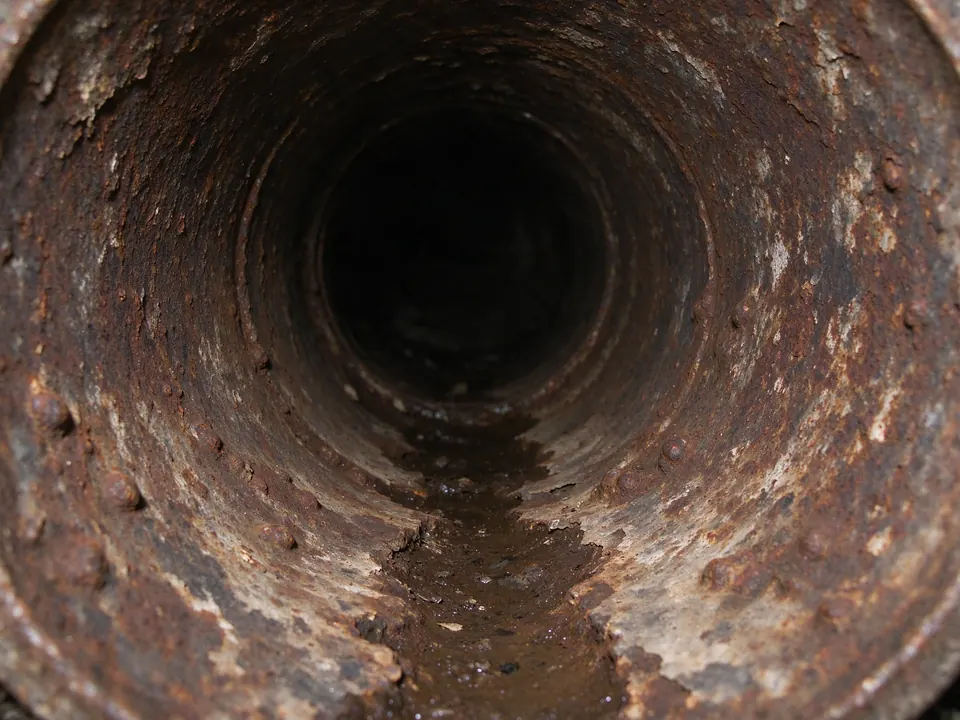
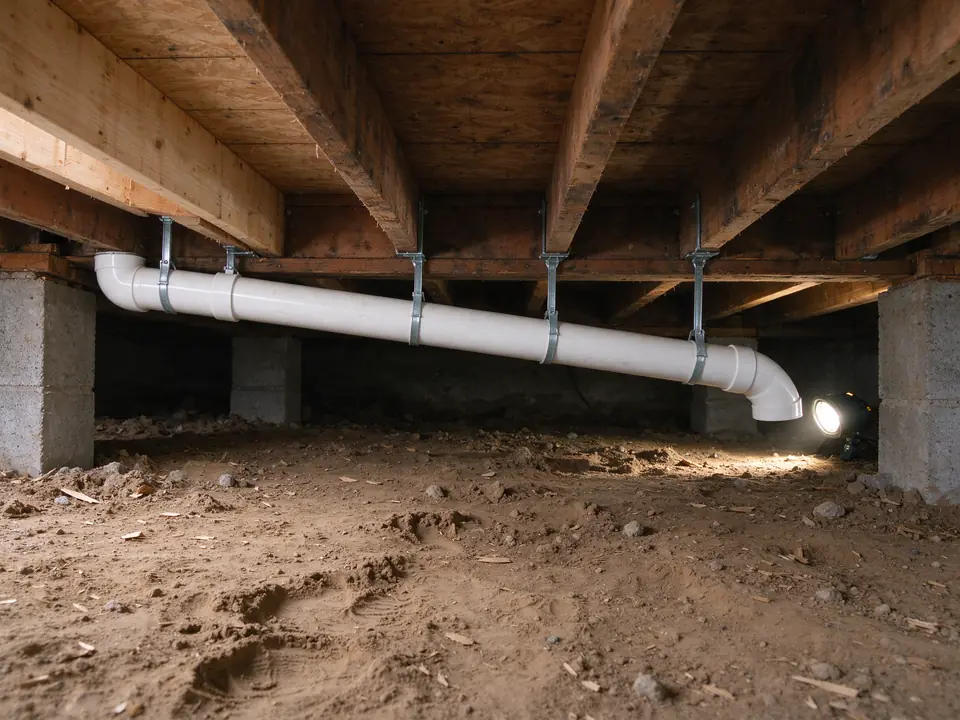
Representative illustrations of this kind of work, not photos of a specific job.
Questions people ask
Can corroded cast iron be lined instead of replaced?
Sometimes. A liner needs a pipe that still holds its shape and has enough wall to act as a host. Heavily scaled cast iron can often be descaled and lined. Pipe with a channel worn through the bottom, holes or long cracks may not support a liner, and those sections have to be replaced first.
My cast iron sewer line is under the slab. Does the floor have to come up?
Not always. Options include lining from a cleanout, cutting a narrow trench through the slab, or tunneling under the foundation from outside. Which one fits depends on the pipe's condition, its route under the house and what flooring is above it.
Is the cast iron under my house part of the sewer lateral?
Usually not by code definition. The pipe under the house is the building drain, and the building sewer, or lateral, begins just outside the foundation. Pasadena, for example, defines the house sewer as starting 24 inches outside the building wall. The distinction matters for permits, responsibility and some rebates.
Why does cast iron pipe crack along the bottom?
Water and solids run along the bottom of the pipe, and over decades corrosion and abrasion wear a channel there. As the bottom thins it can split lengthwise. That is why camera footage of cast iron pays close attention to the invert, the lowest part of the pipe.
Should I replace the clay lateral at the same time as the cast iron?
If the camera shows the clay is also failing, combining the work usually saves a second mobilization and a second set of access points. If the clay films well, replacing only the cast iron and coupling to the clay is reasonable.