Last updated:
Sewer cleanout installation adds a capped access fitting to your lateral, brought up to ground level, so the line can be inspected, cleaned and repaired from outside without going through a toilet or the roof. The most useful version is a two-way cleanout, which opens both toward the house and toward the street. Angeleno Sewer Line Repair installs and repairs cleanouts across Los Angeles, Pasadena, Glendale and Burbank, and often adds one as the first step of a larger repair.
A cleanout does not fix anything on its own, and it is not a substitute for clearing tree roots in a sewer line or repairing a defect. It makes everything else possible, and it changes what a stoppage or an inspection costs for as long as you own the house.
Why a cleanout matters
Every tool used on a sewer lateral goes in from somewhere. A camera head, a cable cutter, a jetter hose and the inversion equipment for a liner all need a straight, open path into the pipe. A cleanout gives that path at a known point, at the right angle, outside the house.
Without one, the options are poor. Pulling a toilet and feeding a cable through the floor flange works, but it risks the wax seal and the floor, and the cable has to negotiate the toilet’s own bends. Going in through a roof vent means working from a ladder, sending the cable down a long vertical drop into the building drain, and having little control at the far end. Neither gives a camera a clean view of the lateral, and neither suits trenchless repair.
A cleanout also helps diagnosis. If the house is backing up and the cleanout cap is opened and water is standing in the riser, the blockage is downstream in the lateral. If the riser is dry, the problem is probably inside the house. That one check can save a lot of guessing during a sewer backup.
Where cleanouts go
The California Plumbing Code calls for cleanouts on the building sewer at set intervals along long runs and at significant changes in direction, so that every part of the line can be reached. On an existing house, the practical questions are where the most useful access would be and how deep the lateral is there.
Near the foundation. The most common location, just outside the house where the building drain becomes the lateral. A cleanout here can reach both the drain under the house and the lateral to the street.
At the property line. A cleanout near the front of the lot gives access close to the boundary between the upper lateral, on your property, and the lower lateral, under the parkway and street. We have not found a City of Los Angeles rule requiring a property-line cleanout on existing homes, so it is a choice rather than an obligation. It is a useful one when the lower lateral is suspect, because it lets a camera look specifically at that section and helps the work there be scoped. In the City of Los Angeles that lower section is still the owner’s, and repairs to it go through the street sewer lateral repair process.
At a change of direction. A long lateral with a sharp bend may need access near the bend so tools can get past it.
Depth varies. City standards for new house connections call for at least 4 feet of cover at the property line, and laterals are often shallower near the house, but older lines do not always match current standards. A camera inspection from an existing opening, with the camera head located from above, tells you where the pipe is and how deep before anyone digs.
Two-way cleanouts
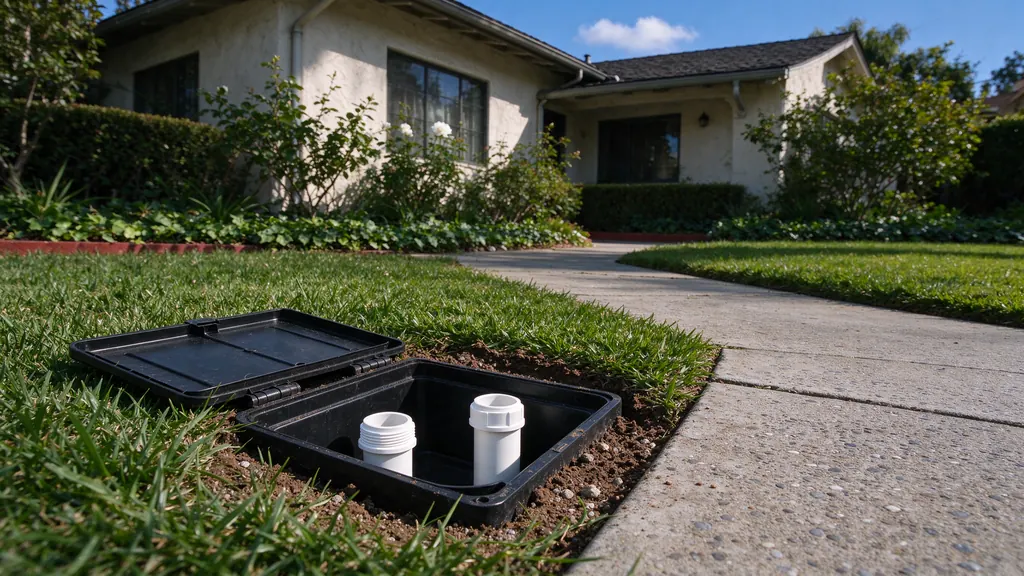
A two-way cleanout is a fitting cut into the lateral with two openings, one angled upstream toward the house and one angled downstream toward the street, each with its own riser to grade. A standard single cleanout points in one direction only, which means tools can go one way easily and the other way awkwardly or not at all.
The two-way arrangement matters most when you need to look at both directions from one spot: the building drain and the lateral, or the lateral on both sides of a suspected problem. It is also the usual access for lining, because the liner can be installed in the right direction without extra pits.
Installing one means excavating to the lateral, cutting out a short section of pipe and setting the fitting with listed couplings to the existing pipe on either side. The risers come up to finished grade and are capped with threaded plugs. If the cleanout is in a lawn, driveway or walkway, a protective box keeps it from being hit by mowers and wheels.
Broken cleanout caps and risers
Cleanout caps break more often than people expect. Mowers clip them, vehicles roll over them, they get cracked by someone forcing them open with the wrong tool, and old caps become brittle. Sometimes the cap is simply missing.
An open or cracked cleanout is worth fixing promptly. It lets sewer gas escape at ground level, and it lets soil, gravel, irrigation and rain water, leaves and pests into the line. A riser that is cracked below grade can also let roots in. Replacing a cap is usually a small job; a riser broken below the surface means digging down to sound pipe and replacing that section of riser.
If the cap is stuck, avoid forcing it with a hammer or wrench applied sideways; that is how risers crack. A cap that will not come off can be cut out and replaced.
Backwater valves
A backwater valve is a different device, often installed at the same time. It is a check valve in the building sewer that lets wastewater flow out to the main and closes if sewage starts flowing back toward the house, for example when the public main surcharges during heavy rain or a blockage downstream.
Under the California Plumbing Code, section 710.1, fixtures on a floor below the next upstream manhole cover of the public sewer must be protected by an approved backwater valve, and fixtures above that level should not discharge through it. LA Sanitation describes the same trigger for City of Los Angeles homes, and installing a backwater valve requires an LADBS permit. Hillside homes that sit below the street, and houses with basement or lower-level bathrooms, are the usual candidates. LA County Public Works gives the same trigger for its sewer districts and notes that the valves need regular maintenance.
A backwater valve only protects the house if it works, which means it needs an access box so its flap can be inspected and cleaned. A valve buried with no access is a maintenance problem waiting to happen.
What cleanout work costs
Typical budgeting range for adding a standalone two-way cleanout at a Los Angeles-area home, as of October 2026: $1,200–$3,900, covering excavation to the lateral, the fitting and riser, and backfill. Adding one during a larger repair often costs less, because the excavation is already open. Depth, what has to be cut through to reach the pipe and how far the lateral is from where the cleanout needs to sit move the number. These are budgeting figures, not quotes.
A camera inspection, often done first to locate the line, runs $175–$800. LA Sanitation’s rebate program offers up to $300 toward a camera inspection for City of Los Angeles sewer customers while funds last.
There is no reliable published range for backwater valve installation. What drives its cost is whether the valve goes inside the house or in an exterior box, how deep the building sewer is at that point, whether slab or hardscape has to be cut, and the permit.
Permits
In the City of Los Angeles, a new cleanout or backwater valve is permitted and inspected through LADBS. Clearing a stoppage through a cleanout does not need a City permit, unless pipe is replaced or the street or sidewalk is excavated. Pasadena, Glendale and Burbank issue their own permits. The permit guide covers who pulls which permit, and a cleanout is usually the starting point for sewer pipe lining if the line later needs it.
Who does the work
Cleanout and backwater valve installations are performed by licensed, bonded and insured contractor partners.
What the work includes
- Locating the lateral and its depth, by camera from an existing opening where one exists
- Excavation to the lateral and cutting in a two-way cleanout fitting
- Risers brought to grade with threaded caps, and a protective box where it sits in a traffic or mowing area
- Replacement of broken or missing cleanout caps and damaged risers
- Backwater valve installation where the plumbing code calls for one, with an access box for maintenance
- LADBS permit and inspection
- Backfill and restoration of the dig, with hardscape scoped separately
Have a camera report, or a line that keeps backing up?
Phones answered 24/7, every day. Bring the video if you have one.
Related resources
Representative jobsite views
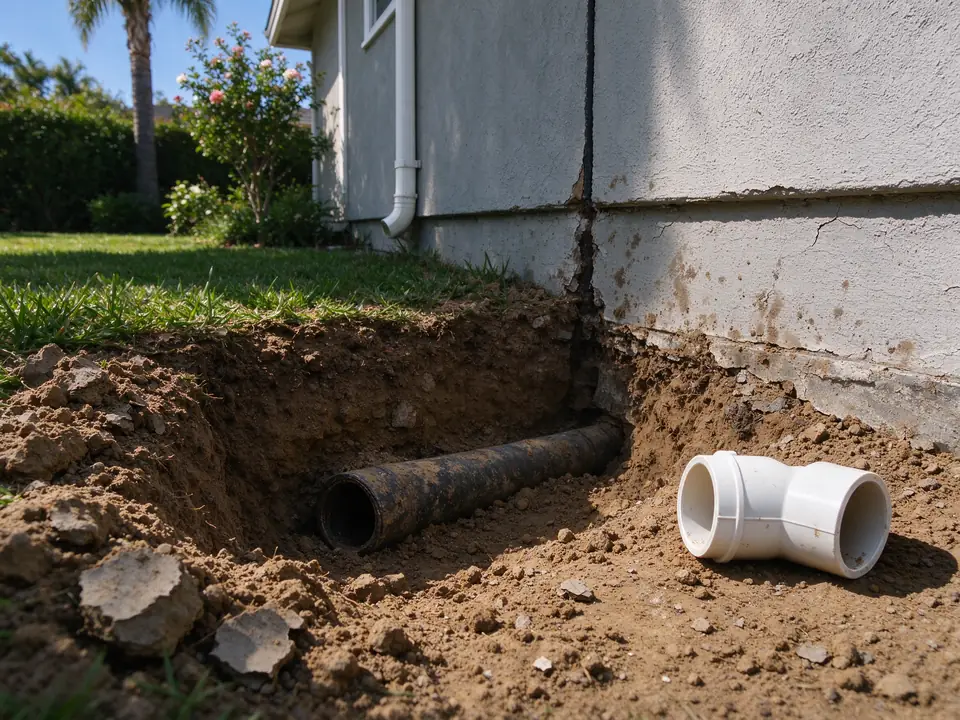
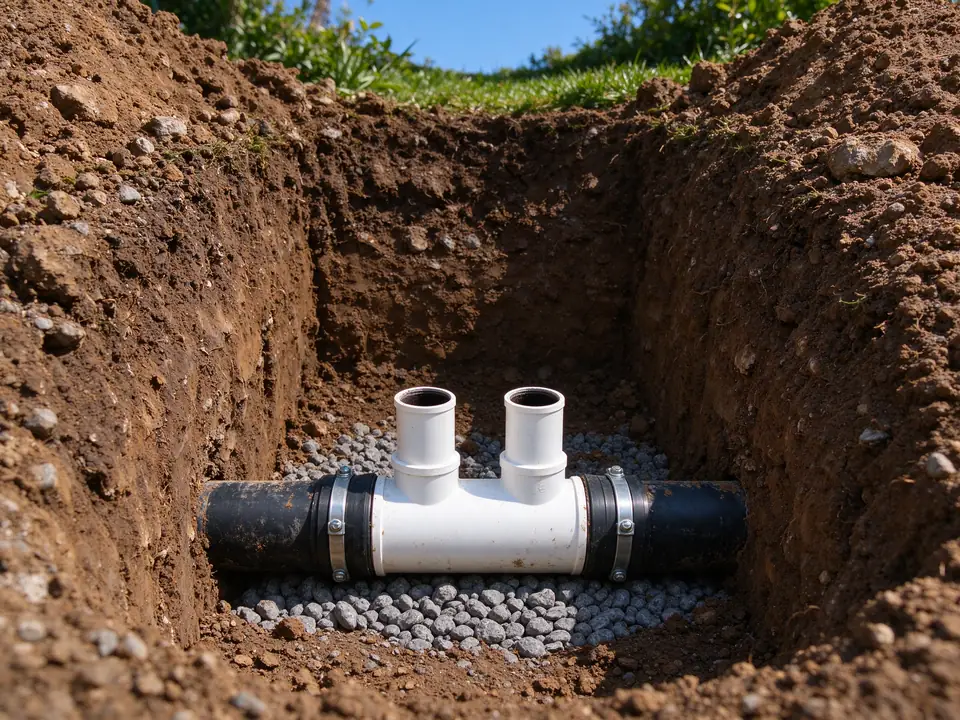
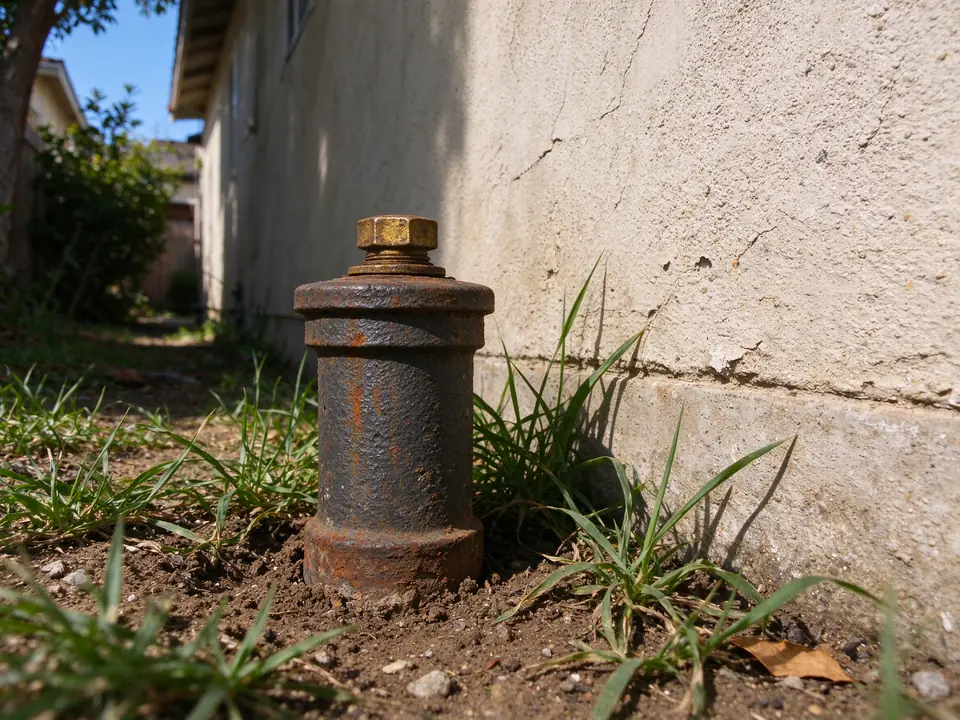
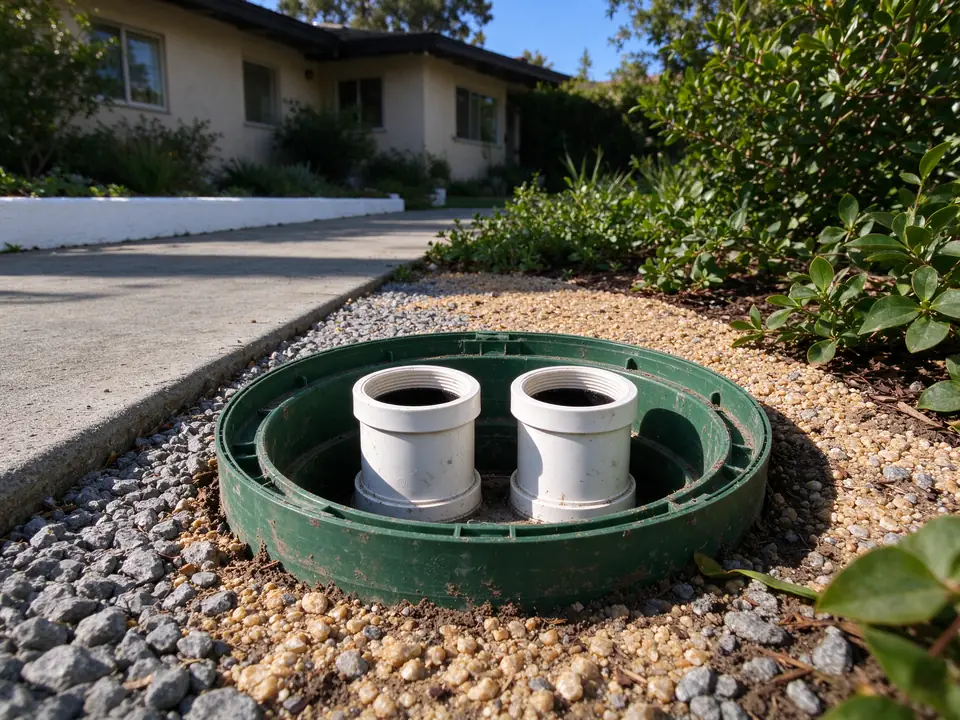
Representative illustrations of this kind of work, not photos of a specific job.
Questions people ask
Do I need a sewer cleanout?
If your line has no usable access point, adding one is worth it. Without a cleanout, a camera or drain machine has to go in through a toilet or a roof vent, which is less effective and riskier for the fixtures. Most trenchless repairs also start from a cleanout.
What is a two-way cleanout?
A fitting set into the lateral with openings pointing both upstream toward the house and downstream toward the street. It lets a camera, cutter or jetter go in either direction from one spot, which is useful for inspecting the building drain and the lateral separately.
Is a property-line cleanout required in Los Angeles?
We have not found a City of Los Angeles requirement for one on existing homes. It is still useful, because it gives access near the boundary between the upper lateral on your property and the lower lateral under the street, and it can make work on the lower section easier to plan.
My cleanout cap is broken. Is that a problem?
Yes, worth fixing soon. An open or cracked cap can let sewer gas out, and lets soil, irrigation water, debris and pests in. If the riser itself is cracked, it may need replacing too. A cap replacement is a small job; a broken riser below grade is a little more.
Do I need a backwater valve?
Under the California Plumbing Code, fixtures on a floor below the next upstream manhole cover must be protected by a backwater valve, and fixtures above it should not drain through the valve. In the City of Los Angeles, installing one needs an LADBS permit. Hillside homes below the street are common candidates.